











The Galerie Montmartre
Open Monday to Sunday, from 9:30am to 6:30pm



Price on request
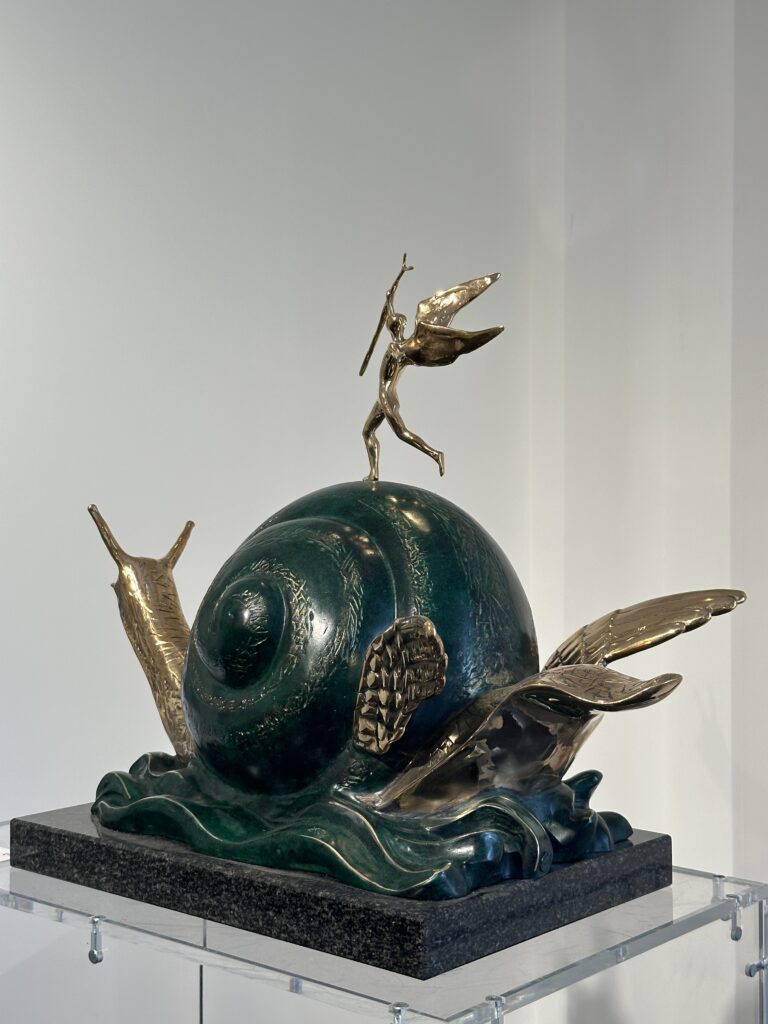
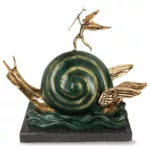
The snail occupies an important place in the Dalinian universe, as it is intimately connected with Sigmund Freud, whom Dalí came to regard as his spiritual father. Dalí was surrounded by psychoanalytical influences and theories of the subconscious were incorporated into his art. Dalí longed to meet Freud and once sketched his head with the likeness of a snail, in the form of a spiral symbolizing “a morphological secret”. When he finally met his idol, he was struck by a specific scene near Freud’s house; on the saddle of a bicycle was a red hot water bottle on which crawled a snail!
Dalí was obsessed with snails, they were a fetish of his and a source of inspiration for his artistic oeuvre. Apart from being one of his favorite foods, he was fascinated by the natural geometry of their shells and the idea of duality: hard exterior and soft interior, just like the egg and the lobster.
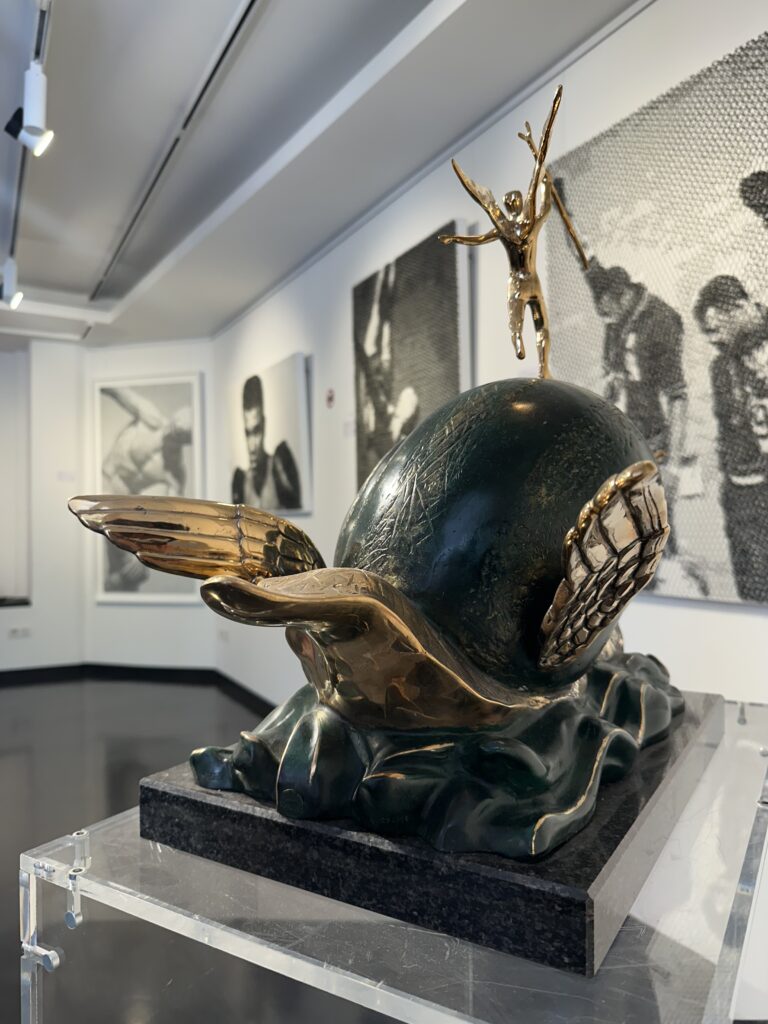
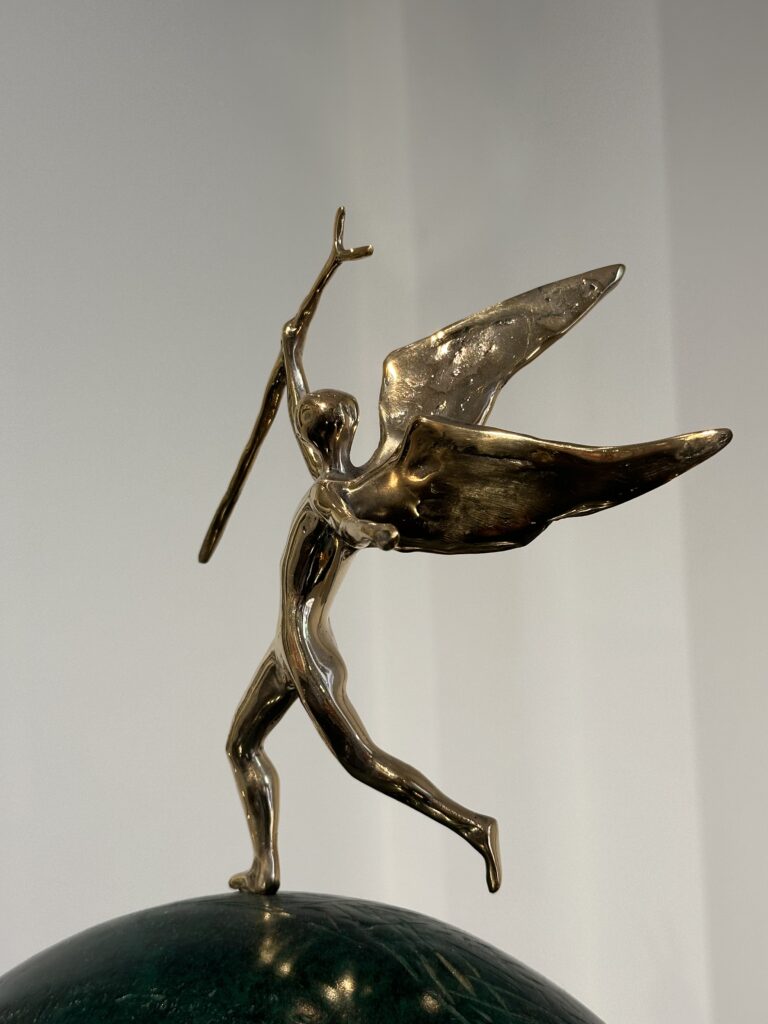
Dalí adds a surrealist touch to the sculpture; paradoxically, the snail, universal symbol of the idle passing of time, has been granted wings, and is seen here riding rapidly on waves. An angel lands softly on its back, bestowing the gift of swift movement. This messenger acts as an intermediary between real and imaginary worlds and holds triumphantly a crutch, another important Dalinian symbol.
The snail’s languid pace contrasts with the angel’s speedy flight; a sharp distinction is also drawn between the ponderous movement of the snail and the agile gracefulness of the angel.
| Technique | bronze, lost-wax |
| Materials | Marble, Bronze |
| Dimensions | 44 cm |
| Condition | excellent |
| Signature | engraved |
| Foundry | Perseo (CH) |
| Edition Information | numbered on 350 |
| Reference | R. N. Descharnes Salvador Dalí Sculptures Objects. Eccart. Ref. 621, page 241. |

Delivery throughout France and internationally
Insurance included for your artworks
FRANCE – BELGIUM – NETHERLANDS – LUXEMBOURG
Salvador Felipe Jacinto Dalí y Doménech was born in 1904 in Figueras, Spain. A painter, sculptor, and author, he is considered one of the most distinctive representatives of surrealism and icons of the 20th century.
Influenced by Impressionism, he began his artistic training at the academy in Madrid. On the advice of Miro, he then left for Paris, where he joined the Surrealist group. There he met his future wife, Gala, his “surrealist muse” and the inspiration for his life and work.
Dalí found his unique style around 1929 when he invented the paranoiac-critical method. His works revolve around the themes of dreams, sexuality, his wife Gala, and religion.
The sculptures of Salvador Dalí
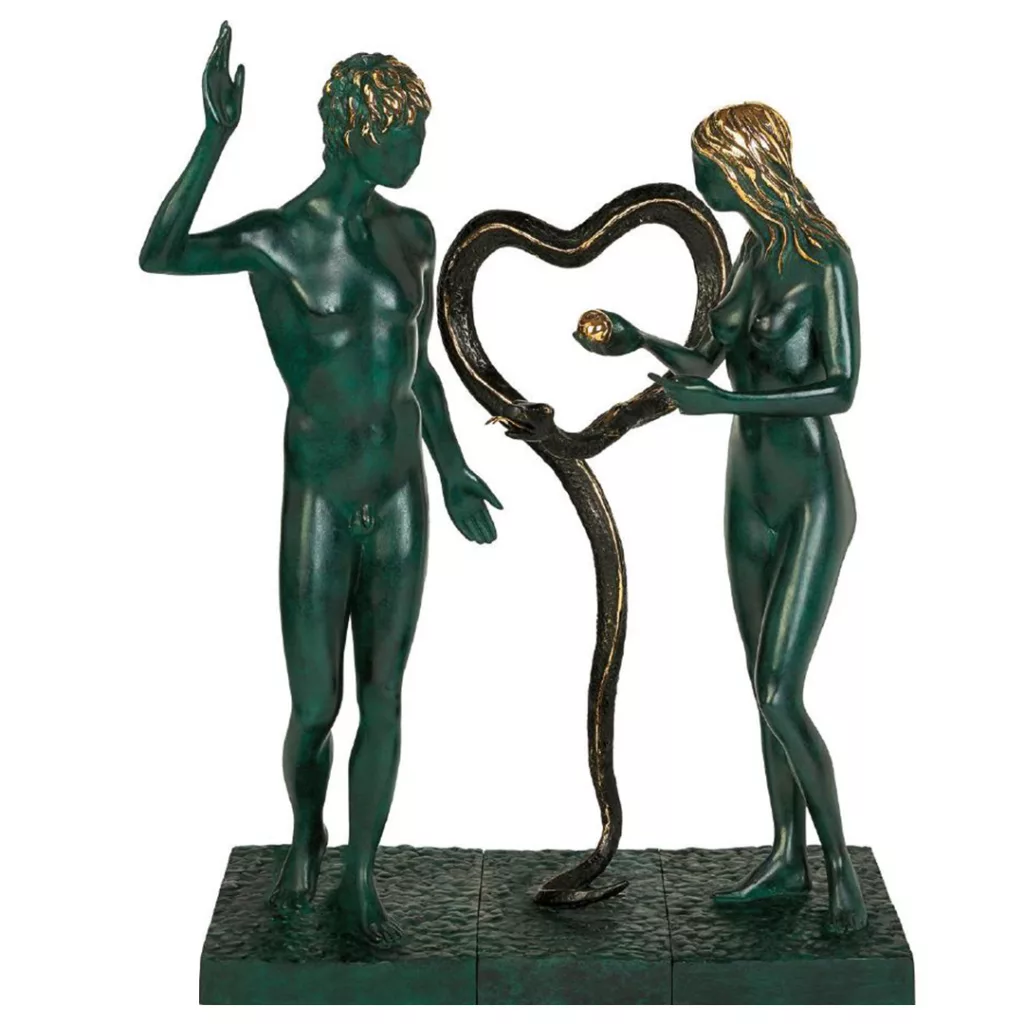
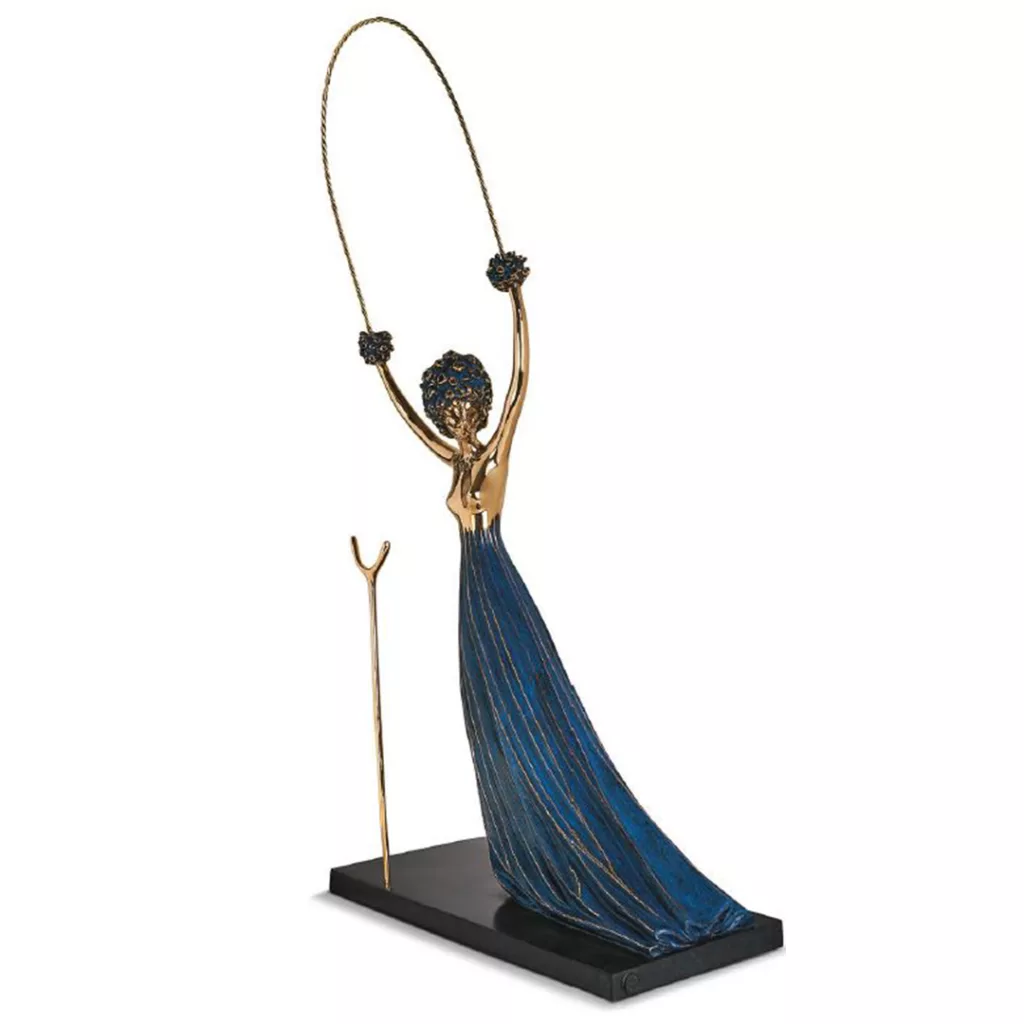
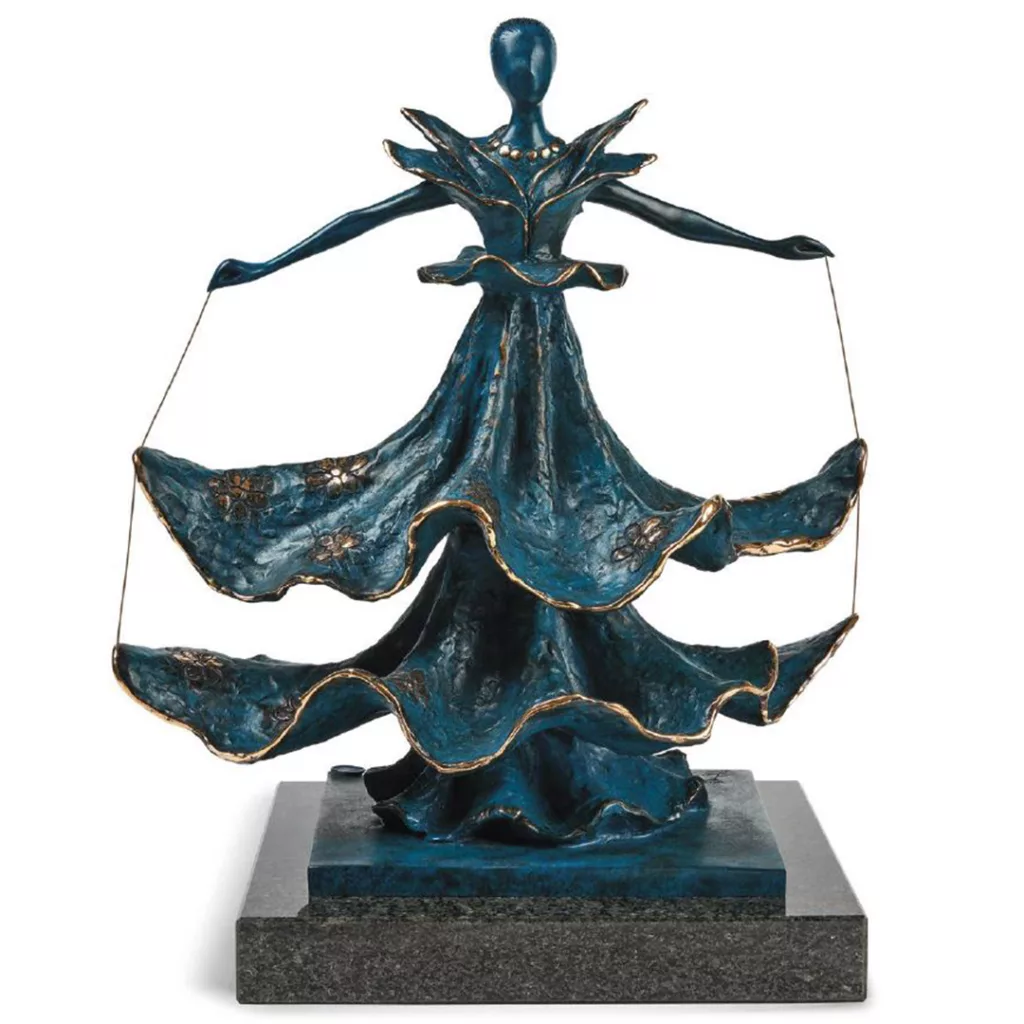
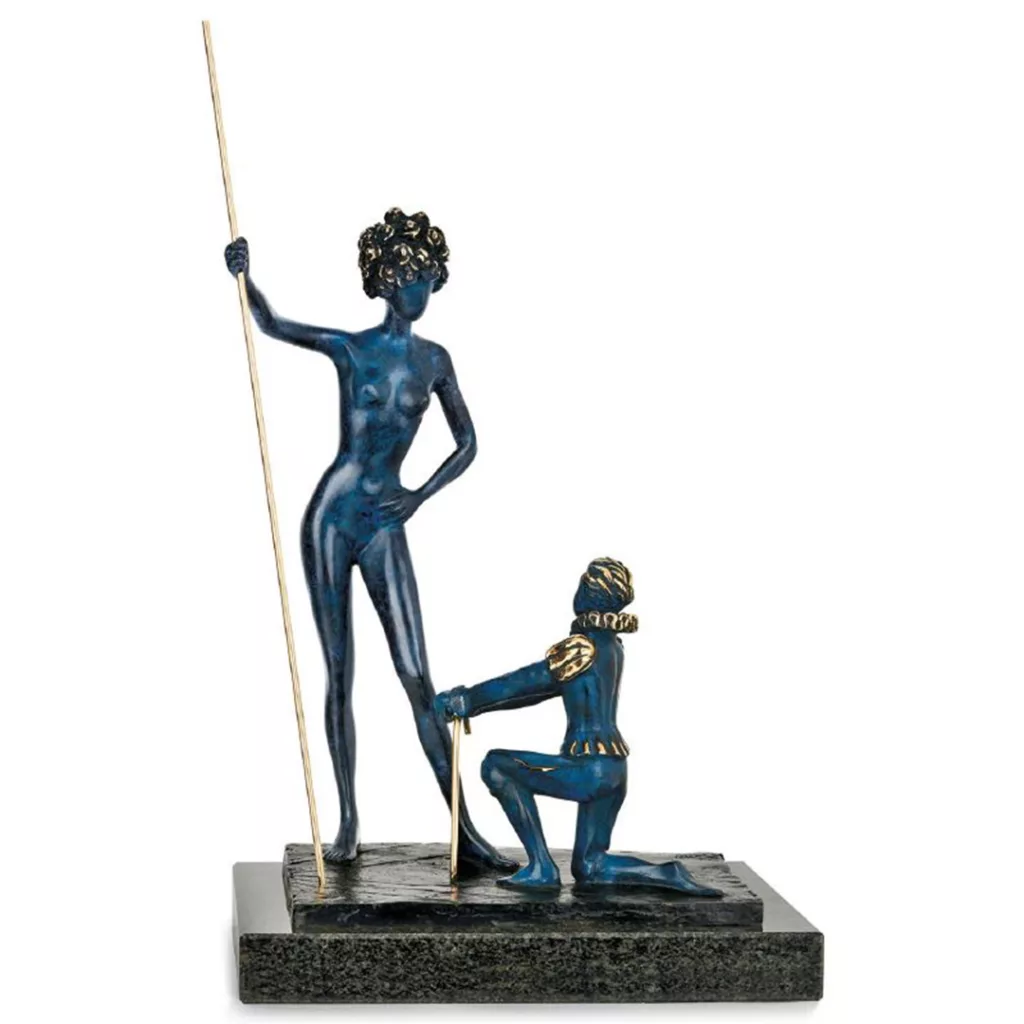
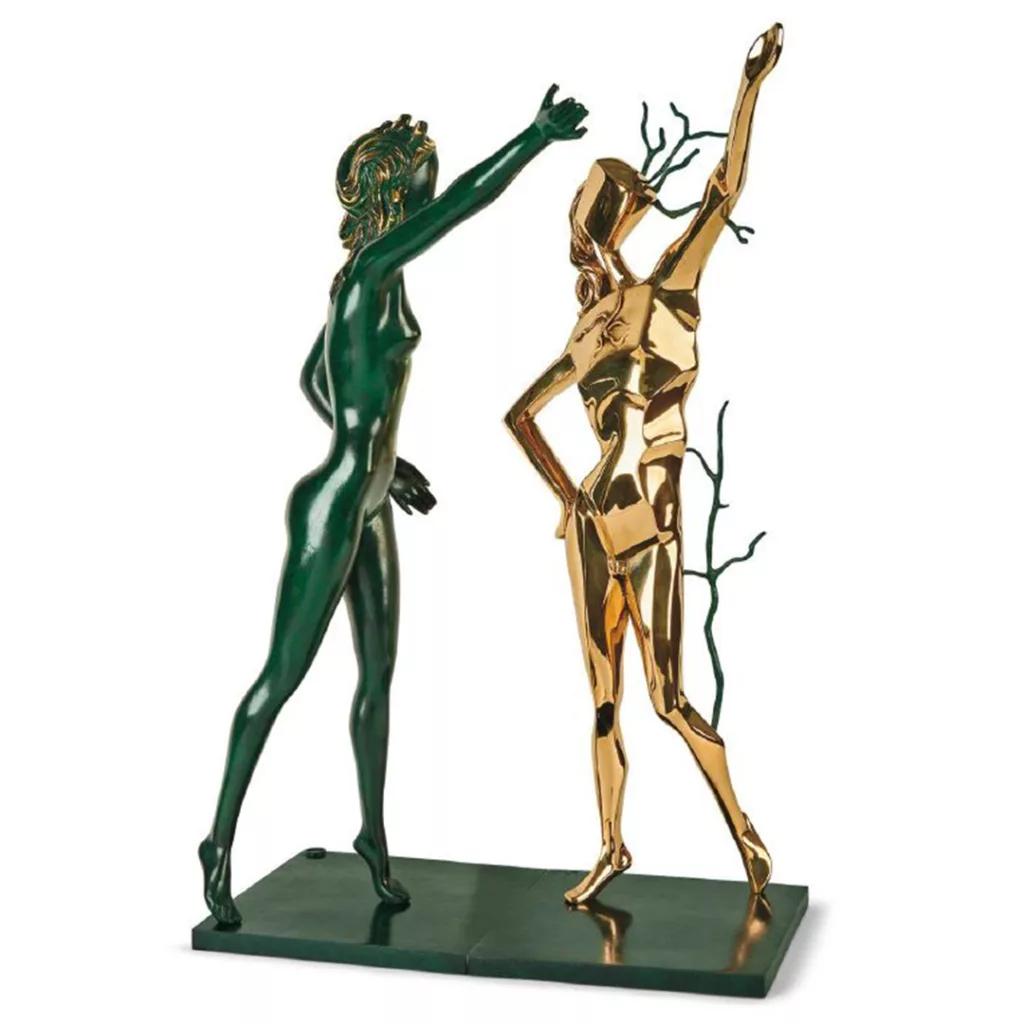
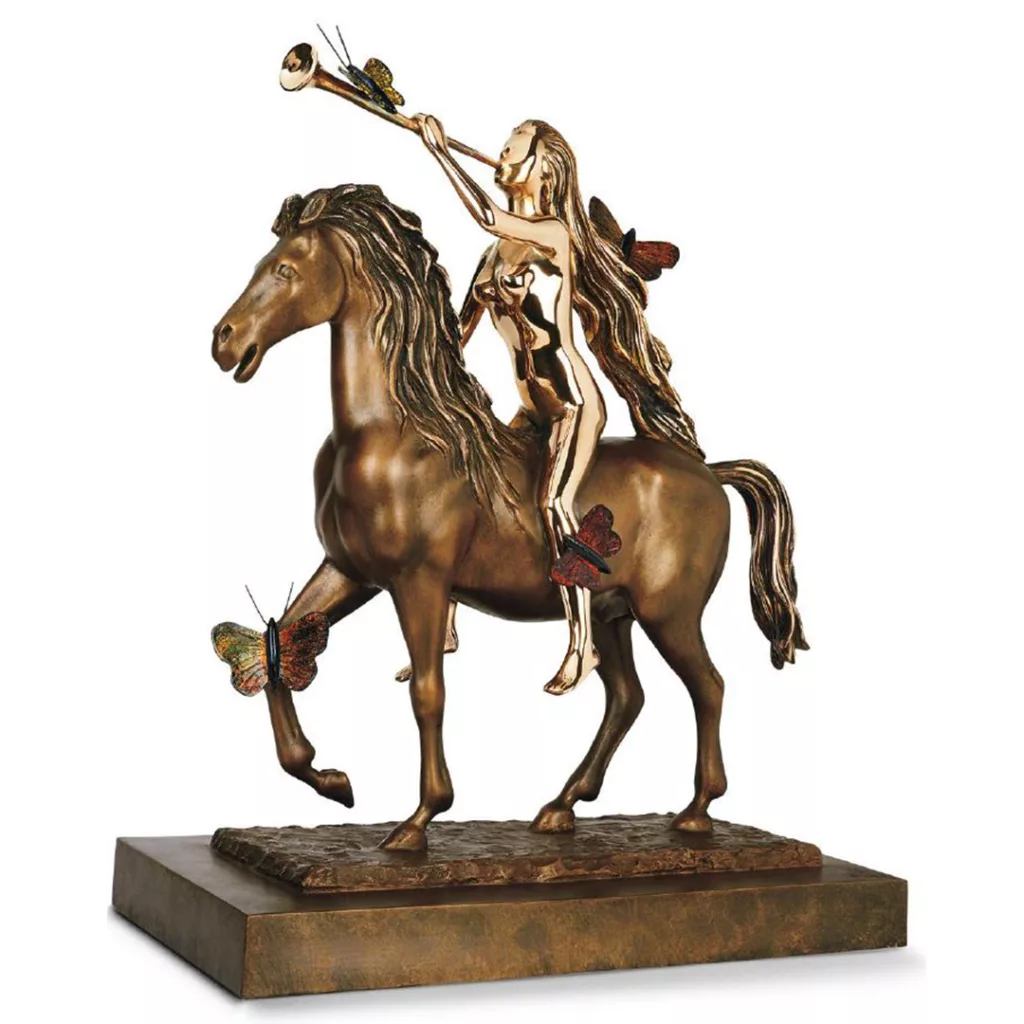
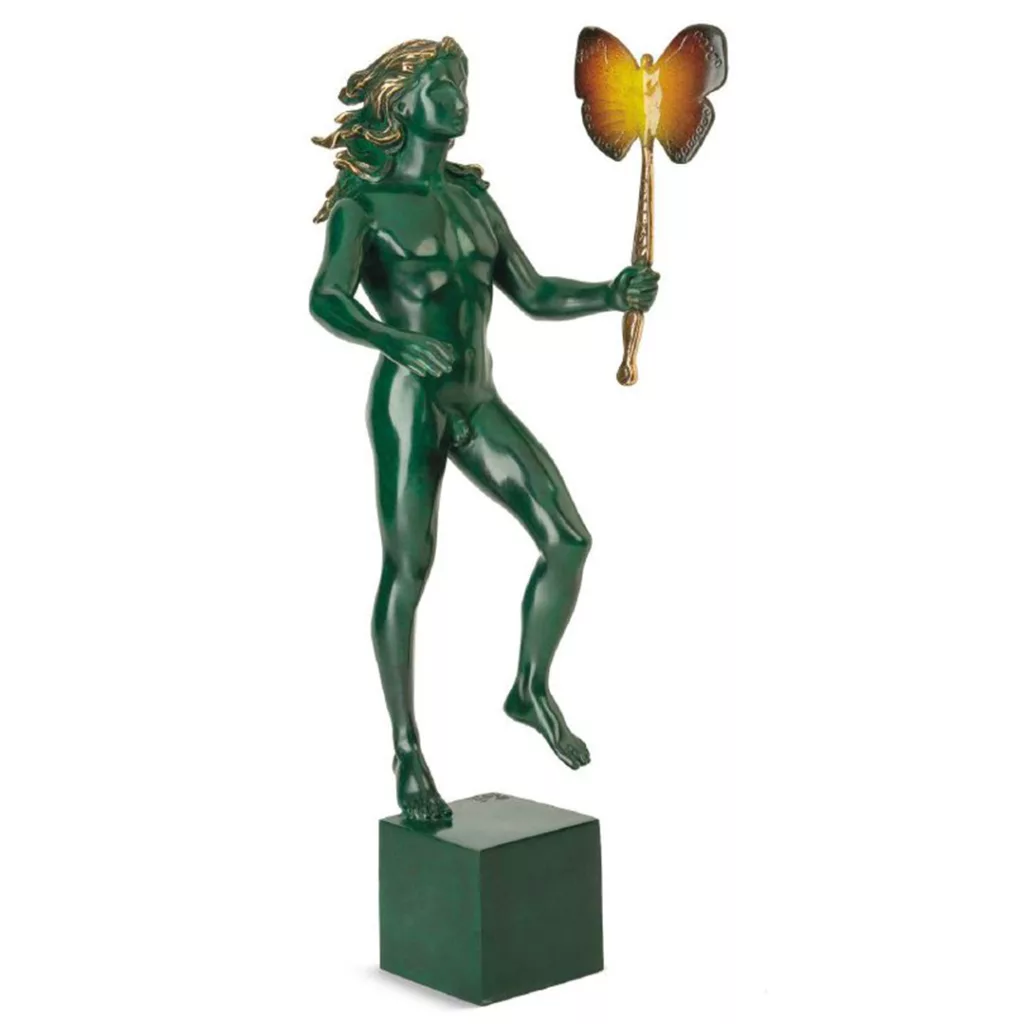
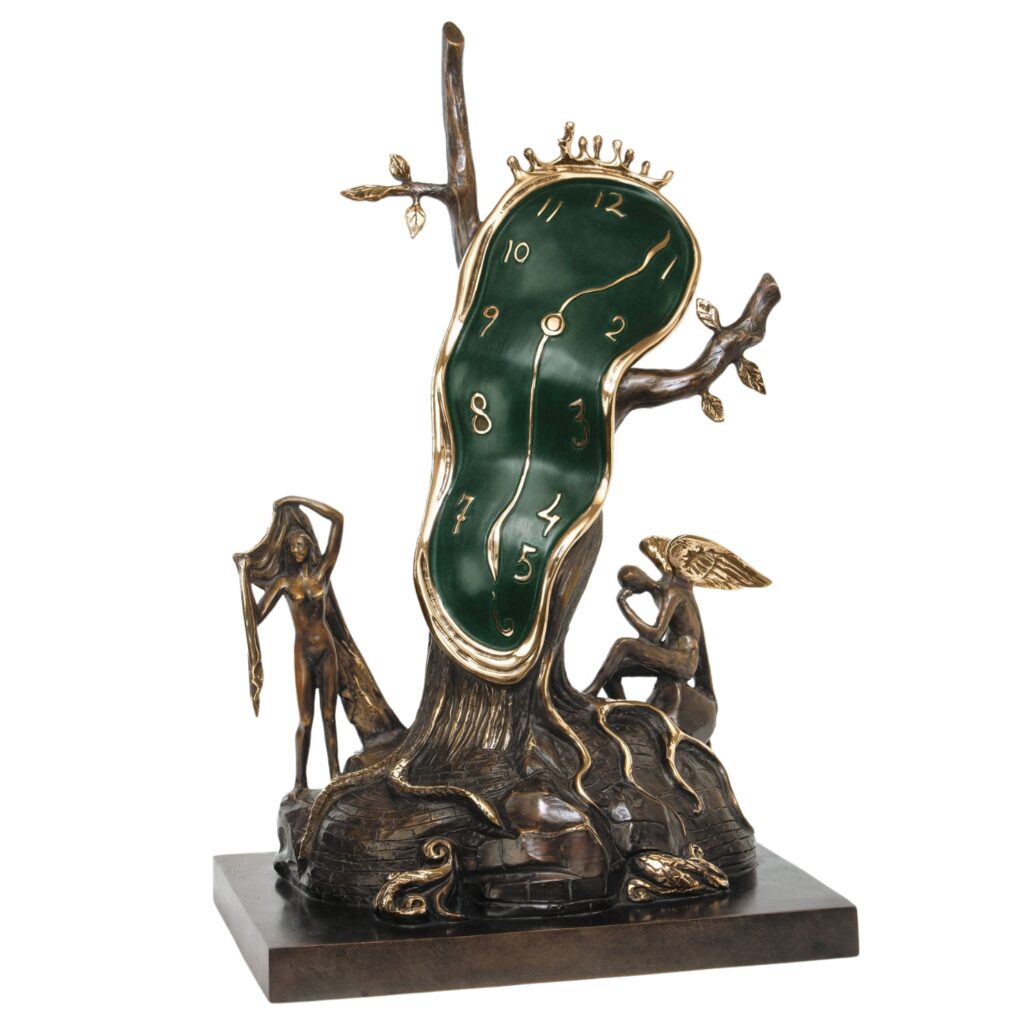
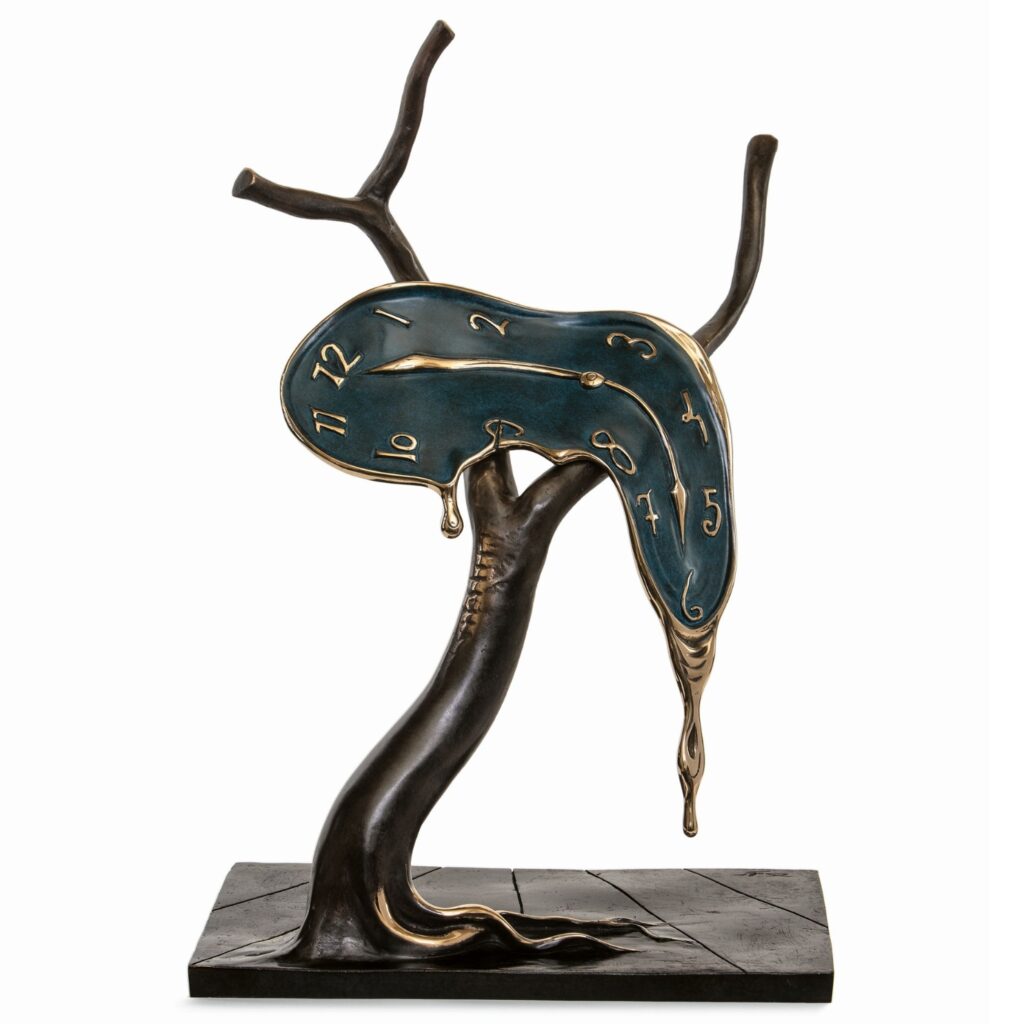
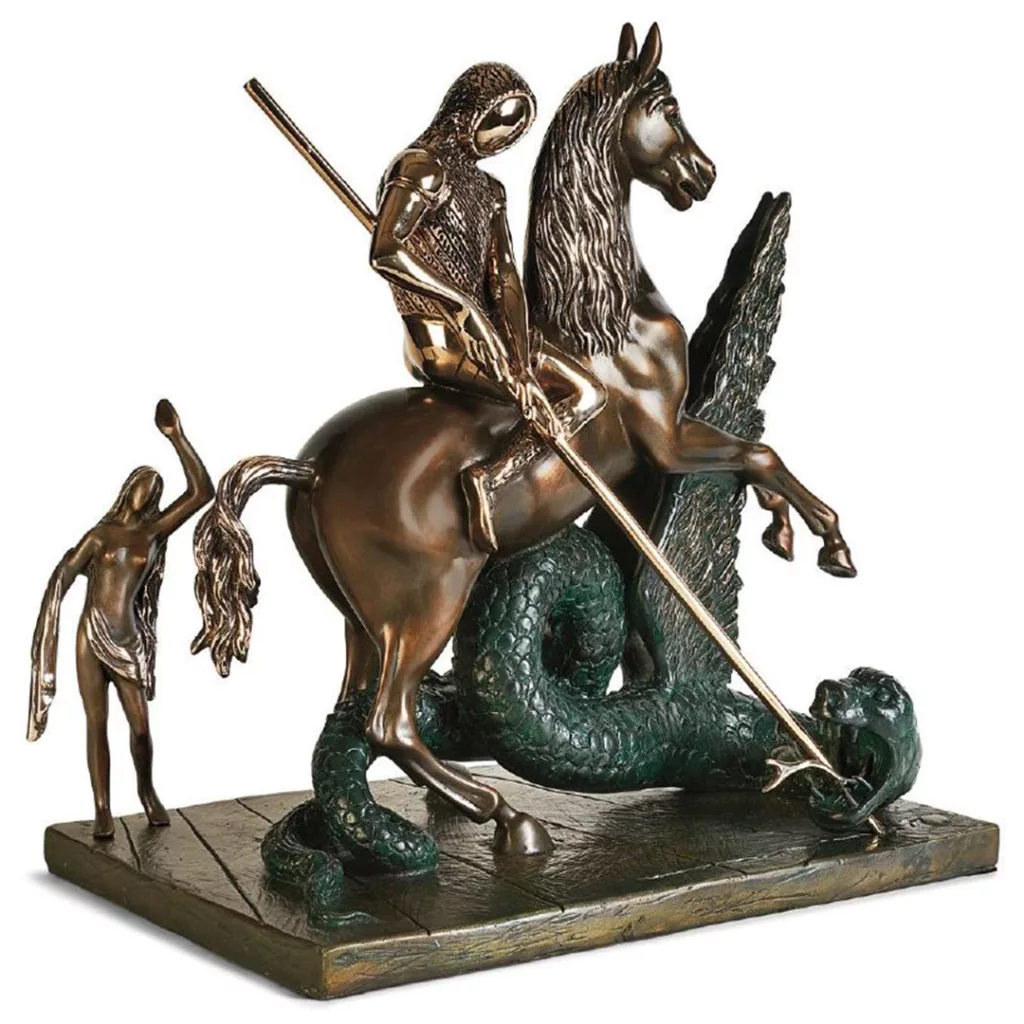
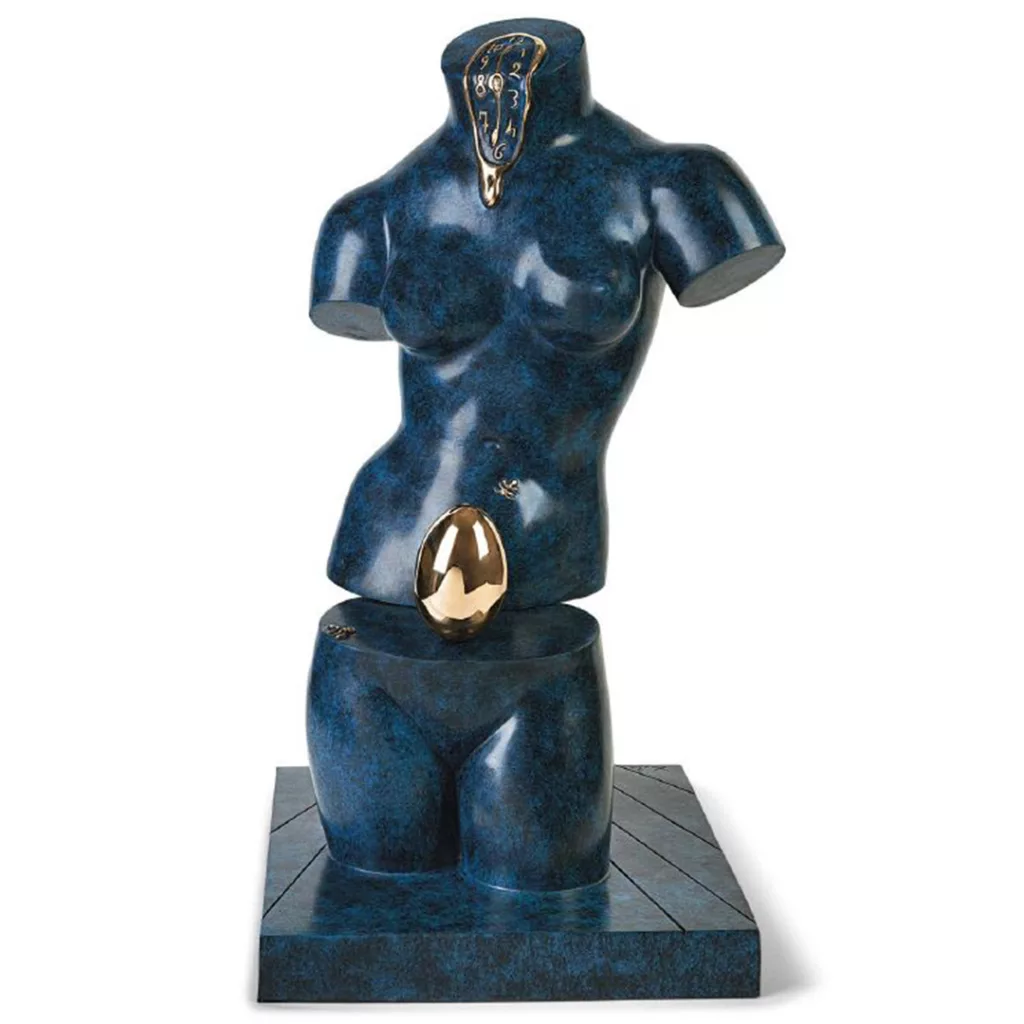
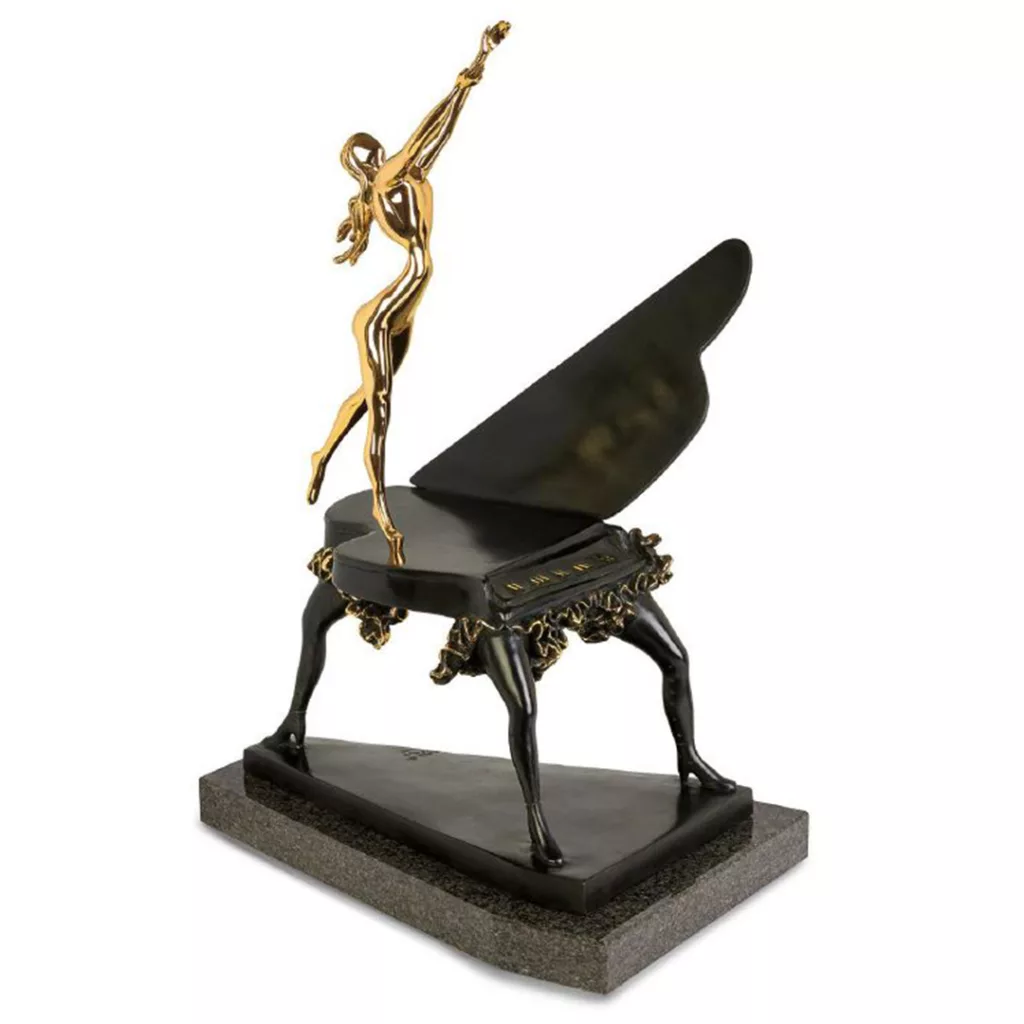
In the 1930s, Dalí began experimenting with three-dimensional art and sculpture. His desire was to translate the fetishes and obsessions of his unconscious into volume and solid matter. He thus recreated the major themes of his pictorial work in the form of sculptures. These sculptures were made using the lost wax technique, a process that allows for perfect precision in bronze modeling.
They represent a significant aspect of Dalí’s artistic creation and provide a synthesis of his interest in form. These bronze sculptures are effectively surrealism in the third dimension.
Galerie Montmartre since 2016, with a permanent representation in France and across international art fairs. The gallery handles international, door-to-door delivery with insurance.
Open Monday to Sunday, from 9:30am to 6:30pm