











The Galerie Montmartre
Open Monday to Sunday, from 9:30am to 6:30pm



Certificat d'authenticité avec l'oeuvre
Price on request
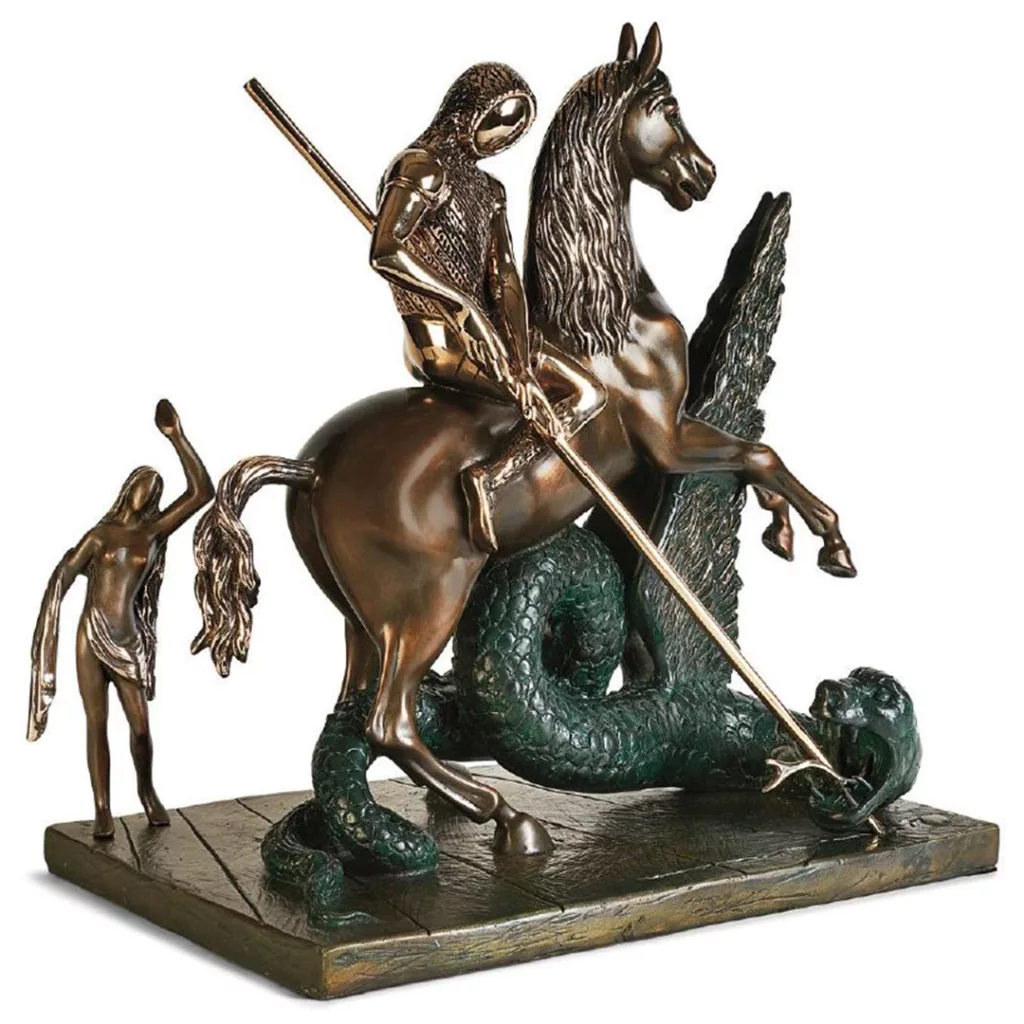
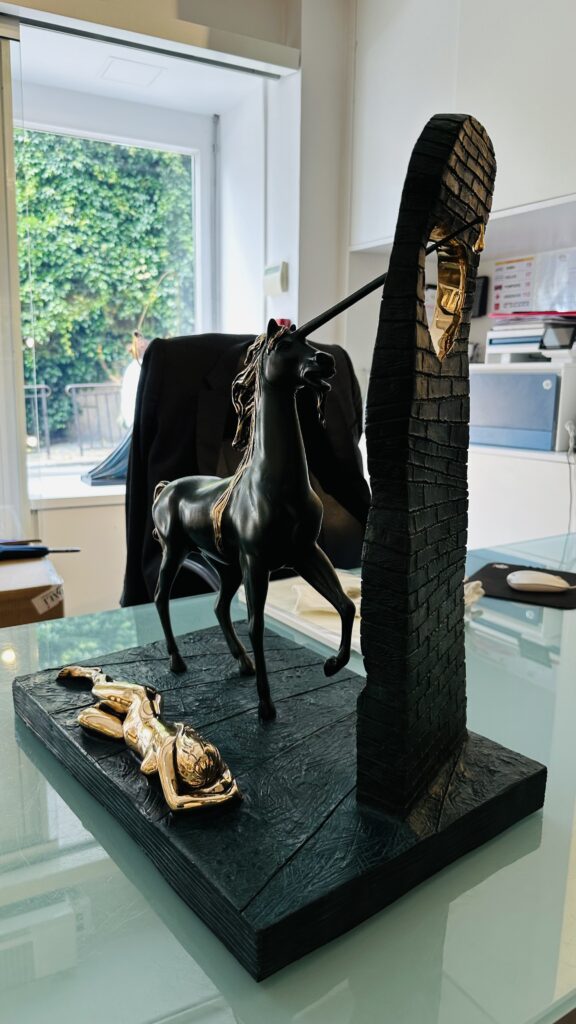
In this sculpture Dalí eulogizes his relationship with his beloved wife Gala, the heart-shaped opening in the wall representing their love. In his autobiography, Dalí illustrates Gala riding a Unicorn, Gala, mounted on the Unicorn of my Fate, suggesting that the image of the Unicorn and eternal love for Gala were, for Dalí, sources of inspiration.
The Unicorn is a mythical creature prominent in legends as a symbol of purity, it was also adopted as the sign or ideal representation of the “perfect” knight. The horn of the Unicorn was believed capable of neutralizing any poison. The Unicorn’s horn pierces the wall through a heart-shaped opening, from which blood drops. Universally celebrated as a benevolent creature that appeared in many diverse cultural traditions, the Unicorn is admired as beautiful, mysterious, difficult to tame. The distinguishing factor is the single horn; it is of significant interest, and is a recurring image in Dalí’s art. Dalí was intrigued by the rhinoceros’s horn fascinated by its perfect spiral logarithmic forms, as well as seashells shaped like horns.
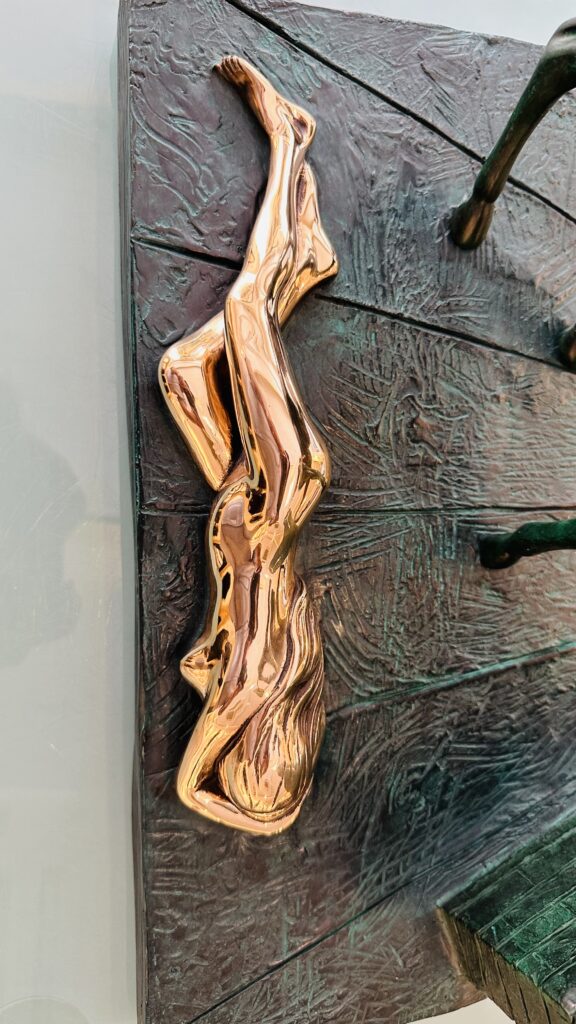
Dalí’s Unicorn becomes a compositional synthesis full of multiple messages; the symbolism of the wall, the bleeding heart, Dalí’s love for Gala, and the woman in the foreground who adds to the feminine and sensual aspect of the sculpture.
| Technique | bronze, cire perdue |
| Materials | Bronze |
| Dimensions | 57 cm |
| Condition | excellent |
| Signature | gravée sur la base |
| Certificate | Certificate of authenticity avec l'oeuvre |
| Foundry | Perseo (CH) |
| Edition Information | numéroté sur 350 + 35 E.A. |
| Creation Information | conception en 1977 ; première fonte en 1984 |
| Reference | R. N. Descharnes Salvador Dalí Sculptures Objects. Eccart. Ref. 627, page 244. |

Delivery throughout France and internationally
Insurance included for your artworks
FRANCE – BELGIUM – NETHERLANDS – LUXEMBOURG
Salvador Felipe Jacinto Dalí y Doménech was born in 1904 in Figueras, Spain. A painter, sculptor, and author, he is considered one of the most distinctive representatives of surrealism and icons of the 20th century.
Influenced by Impressionism, he began his artistic training at the academy in Madrid. On the advice of Miro, he then left for Paris, where he joined the Surrealist group. There he met his future wife, Gala, his “surrealist muse” and the inspiration for his life and work.
Dalí found his unique style around 1929 when he invented the paranoiac-critical method. His works revolve around the themes of dreams, sexuality, his wife Gala, and religion.
The sculptures of Salvador Dalí
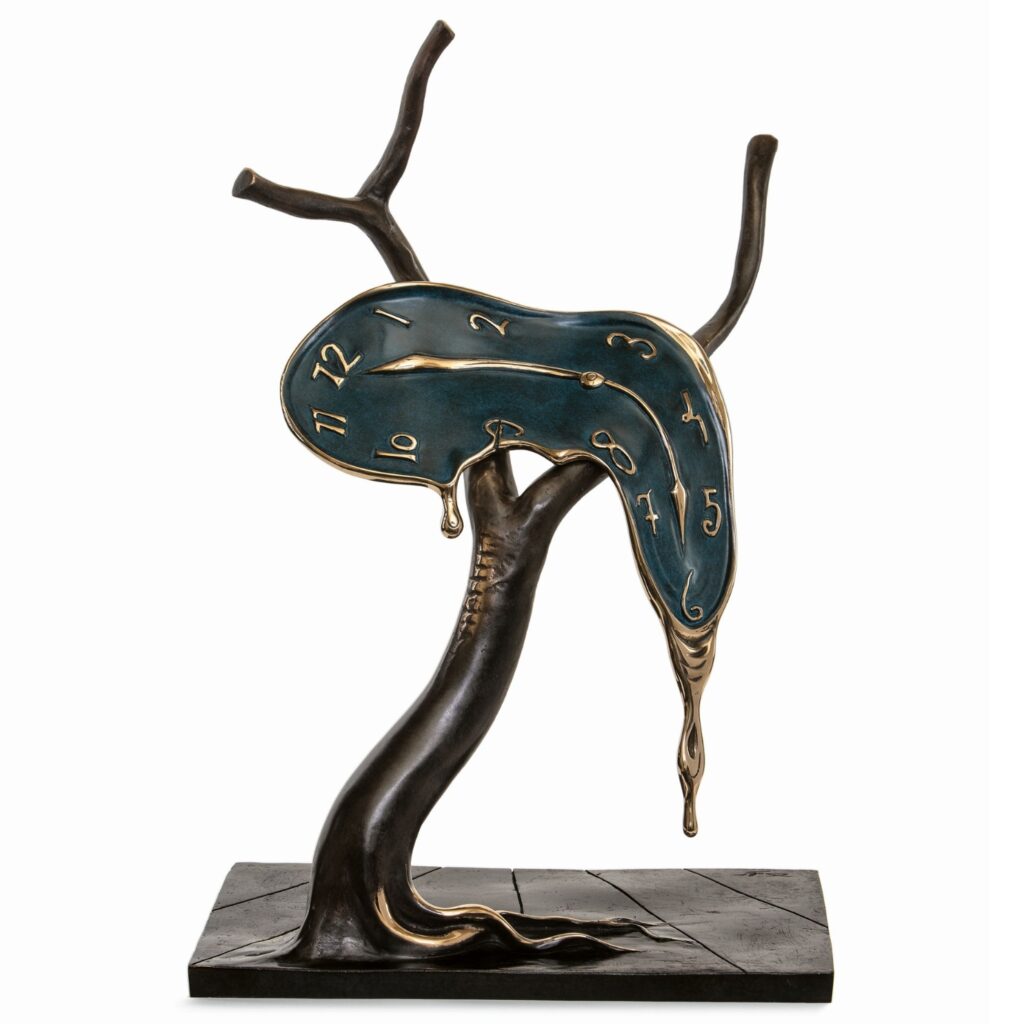
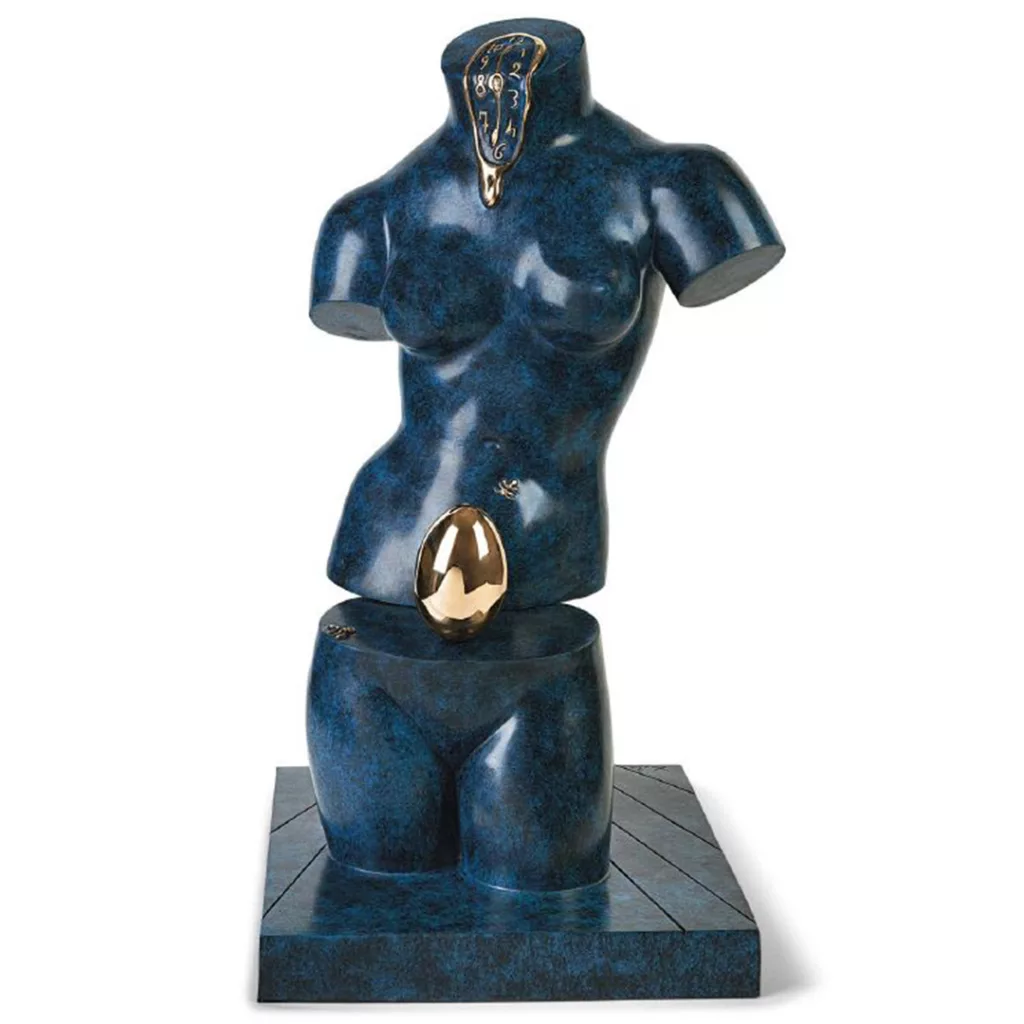
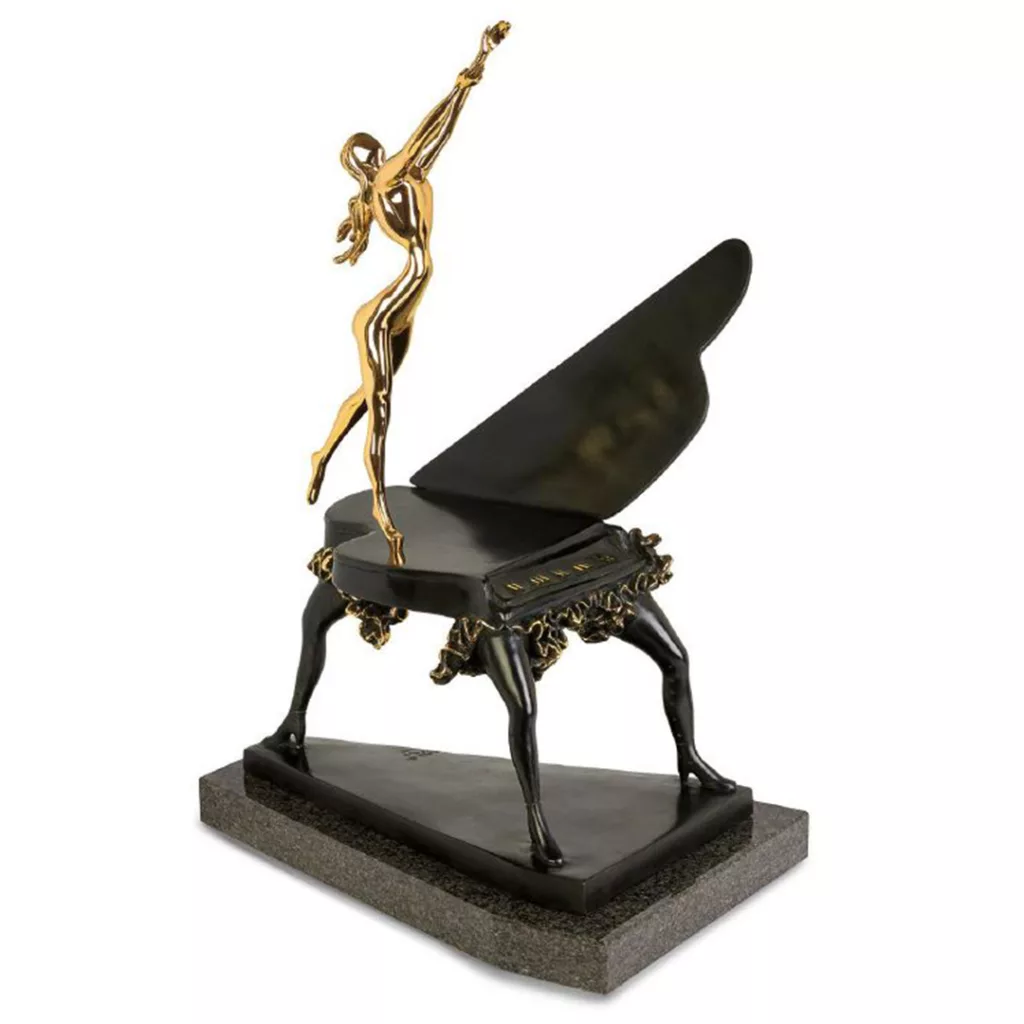
In the 1930s, Dalí began experimenting with three-dimensional art and sculpture. His desire was to translate the fetishes and obsessions of his unconscious into volume and solid matter. He thus recreated the major themes of his pictorial work in the form of sculptures. These sculptures were made using the lost wax technique, a process that allows for perfect precision in bronze modeling.
They represent a significant aspect of Dalí’s artistic creation and provide a synthesis of his interest in form. These bronze sculptures are effectively surrealism in the third dimension.
Galerie Montmartre since 2016, with a permanent representation in France and across international art fairs. The gallery handles international, door-to-door delivery with insurance.
Open Monday to Sunday, from 9:30am to 6:30pm