











The Galerie Montmartre
Open Monday to Sunday, from 9:30am to 6:30pm


Certificat d'authenticité avec l'oeuvre
Price on request
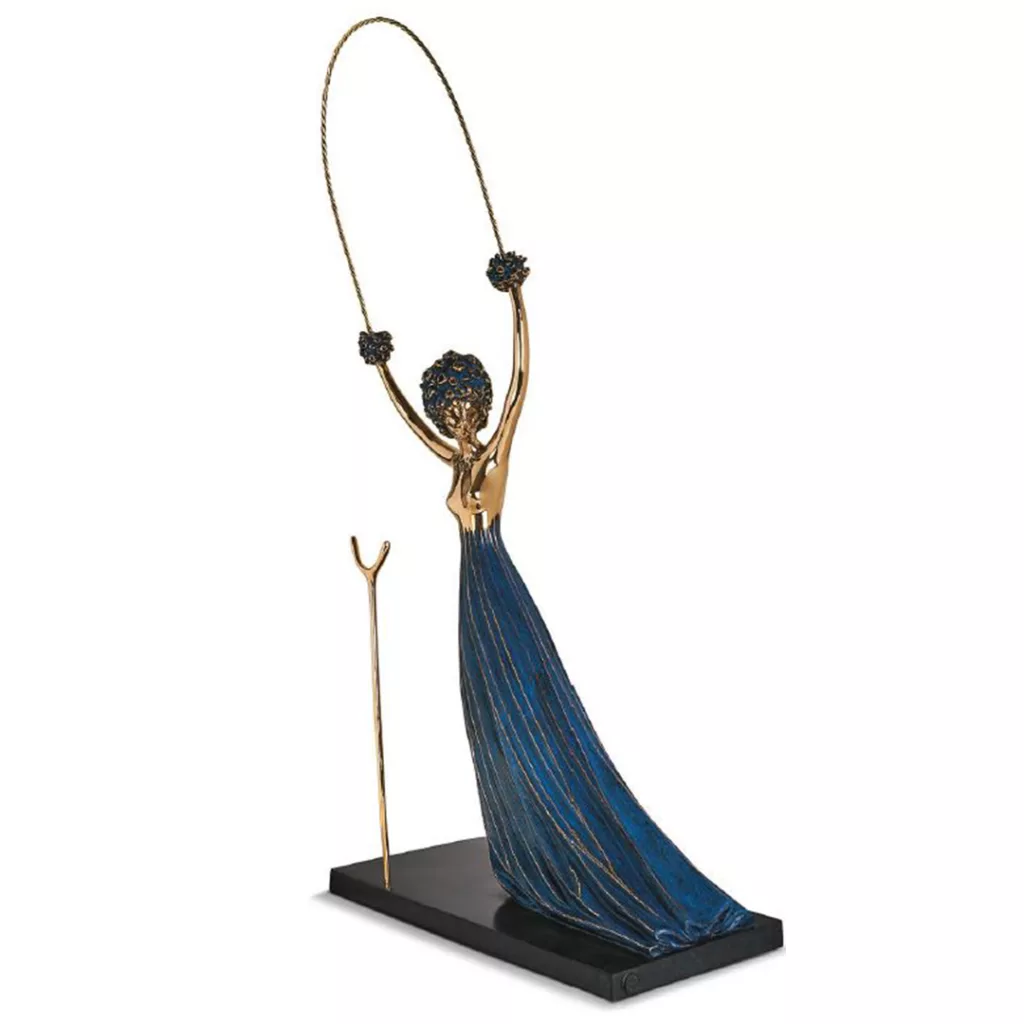
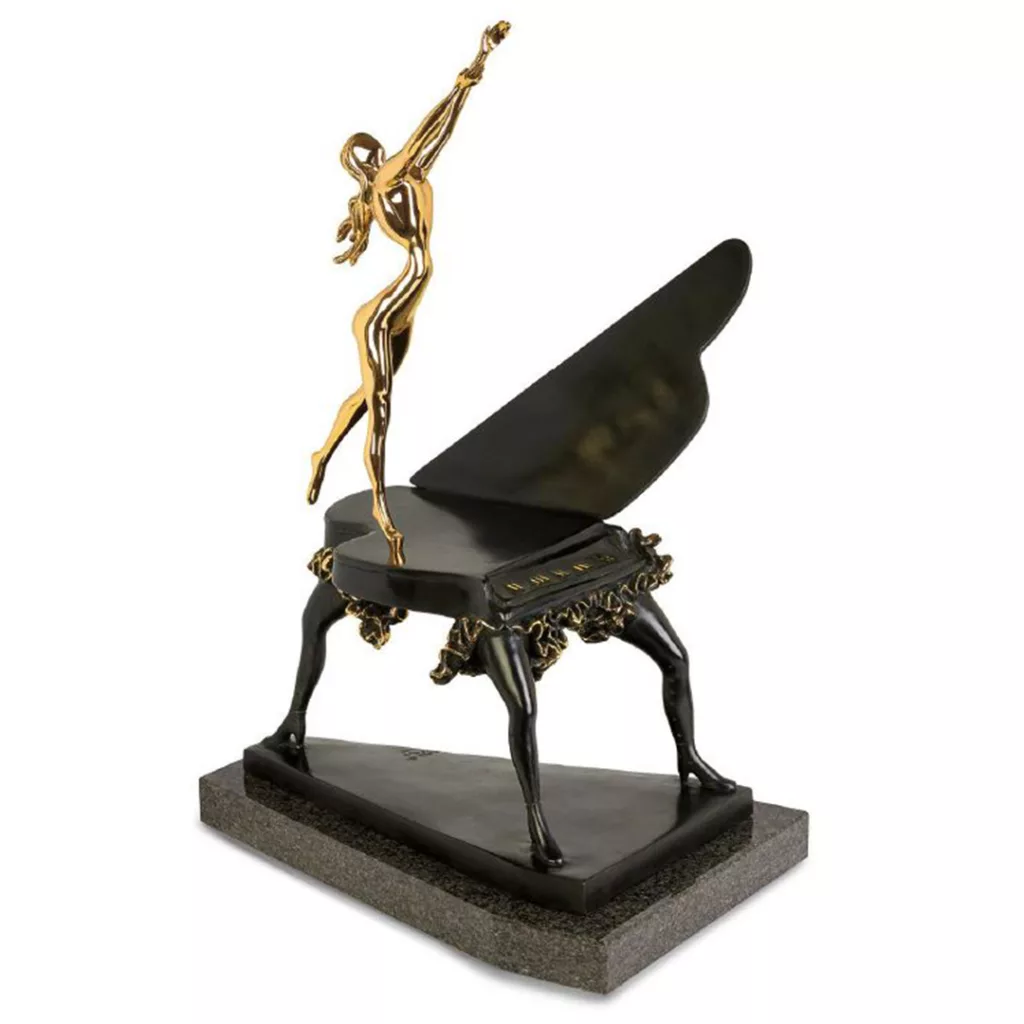
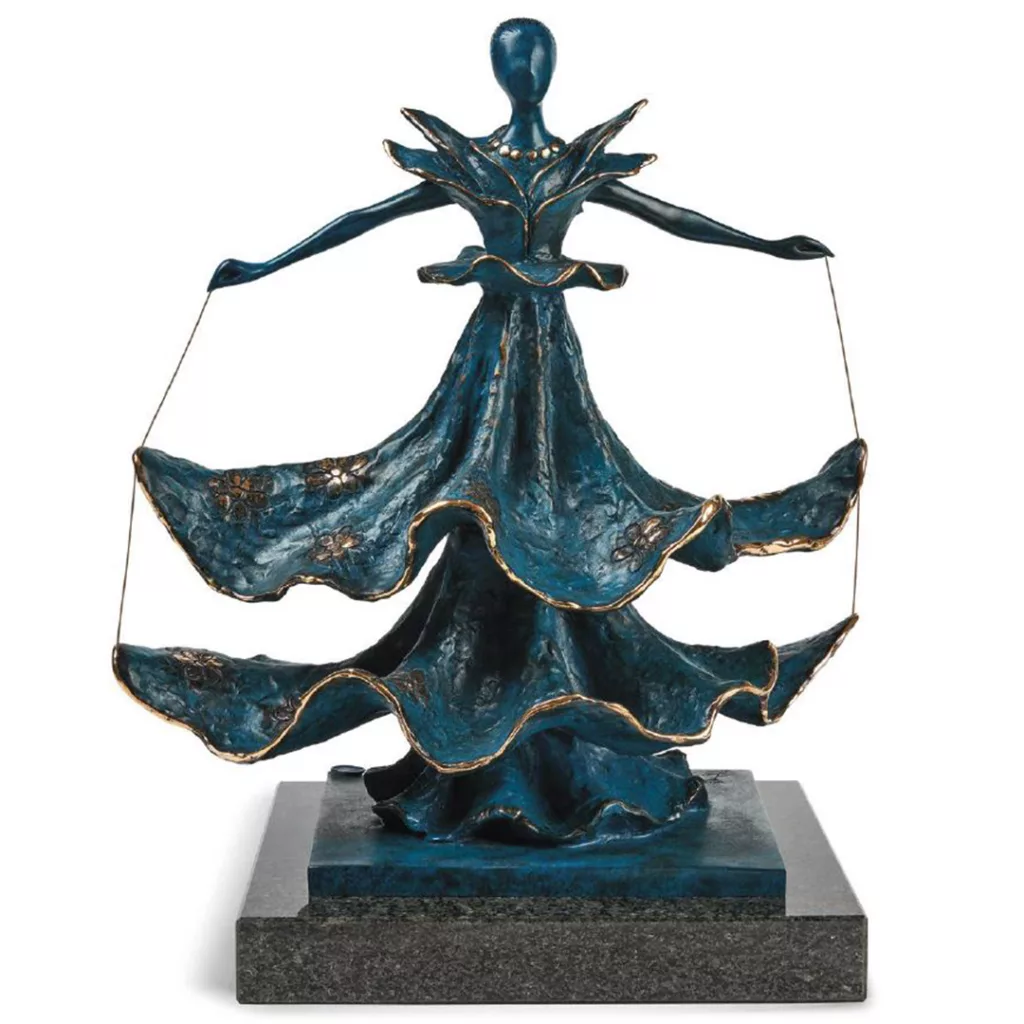
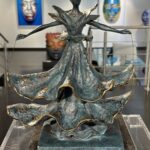
Dalí was fascinated with the art of dance and it was of great significance in his life and work. He was especially attracted to the passion and flamboyance of the flamenco, known for its ability to explore the full range of feelings and emotions. He was an avid admirer of the “flamenco queen” of Spain, “La Chana”, and would often watch her perform, with his pet ocelot in tow.
Elements of flamenco can be seen in this sculpture; the ruffles on the dress, its low neckline, and the hair pulled back in a bun. Dalí seems to capture the sense of movement perfectly. The dancer twirls around in a display of vitality and ecstasy, the layers of her skirt flaring out as she moves; the heaviness of the bronze contrasts with the lightness of the vibrant dancer. The faceless figure, a recurring motif in Dalí’s oeuvre, lures us in with her intense rhythm.
Undoubtedly it was Dalí’s fascination with ballet that influenced much of his art work. His close links with the stage and theatre, meant he collaborated with designers and dressmakers throughout the 1930’s and beyond, designing costumes, contributing to stage sets and writing librettos, such as Bacchanale (1939), and Tristan Fou (1936-1938).
| Technique | bronze, cire perdue |
| Materials | Marble, Bronze |
| Dimensions | 40.5 cm |
| Condition | excellent |
| Signature | gravée sur la base |
| Certificate | Certificate of authenticity avec l'oeuvre |
| Foundry | Perseo (CH) |
| Edition Information | numéroté sur 350 + 35 E.A. |
| Creation Information | conception en 1949 ; première fonte en 1984 |
| Reference | R. N. Descharnes Salvador Dalí Sculptures Objects. Eccart. Ref. 646, page 251. |

Delivery throughout France and internationally
Insurance included for your artworks
FRANCE – BELGIUM – NETHERLANDS – LUXEMBOURG
Salvador Felipe Jacinto Dalí y Doménech was born in 1904 in Figueras, Spain. A painter, sculptor, and author, he is considered one of the most distinctive representatives of surrealism and icons of the 20th century.
Influenced by Impressionism, he began his artistic training at the academy in Madrid. On the advice of Miro, he then left for Paris, where he joined the Surrealist group. There he met his future wife, Gala, his “surrealist muse” and the inspiration for his life and work.
Dalí found his unique style around 1929 when he invented the paranoiac-critical method. His works revolve around the themes of dreams, sexuality, his wife Gala, and religion.
The sculptures of Salvador Dalí
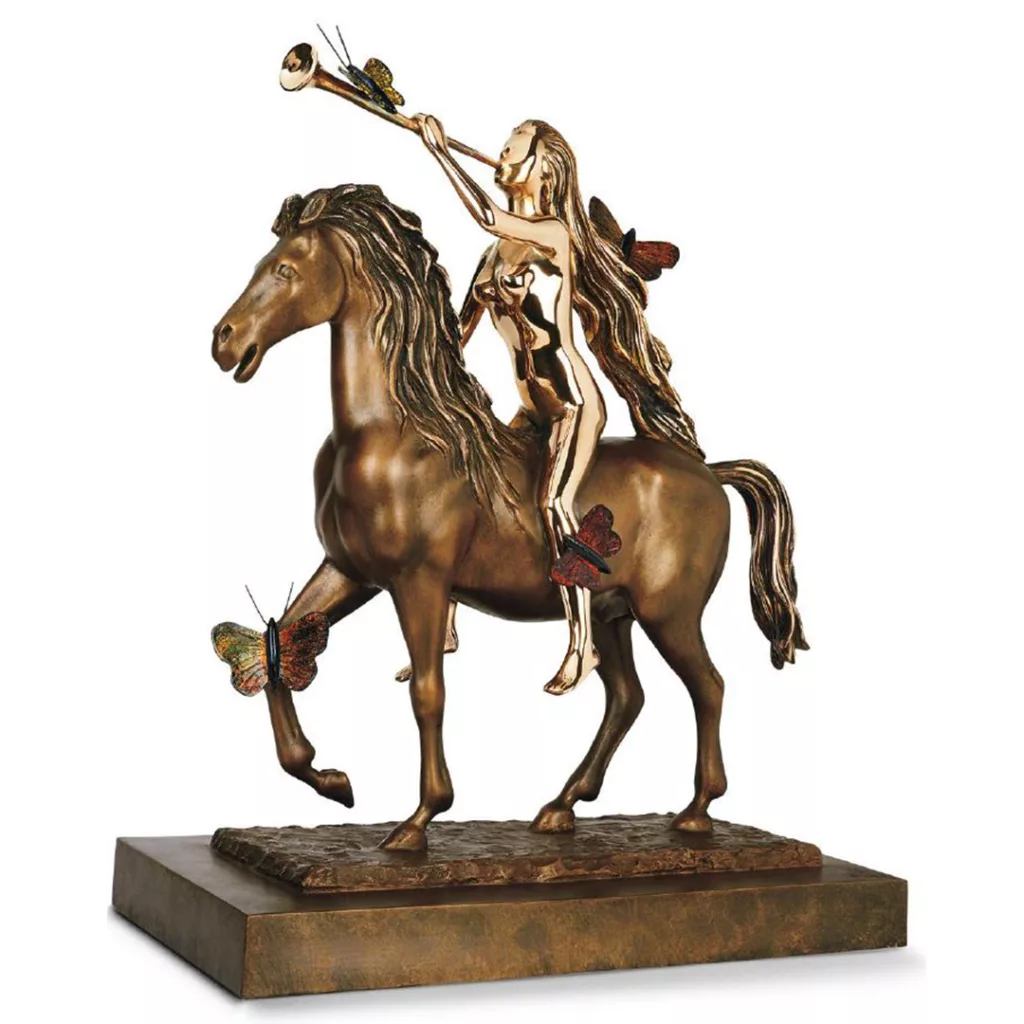
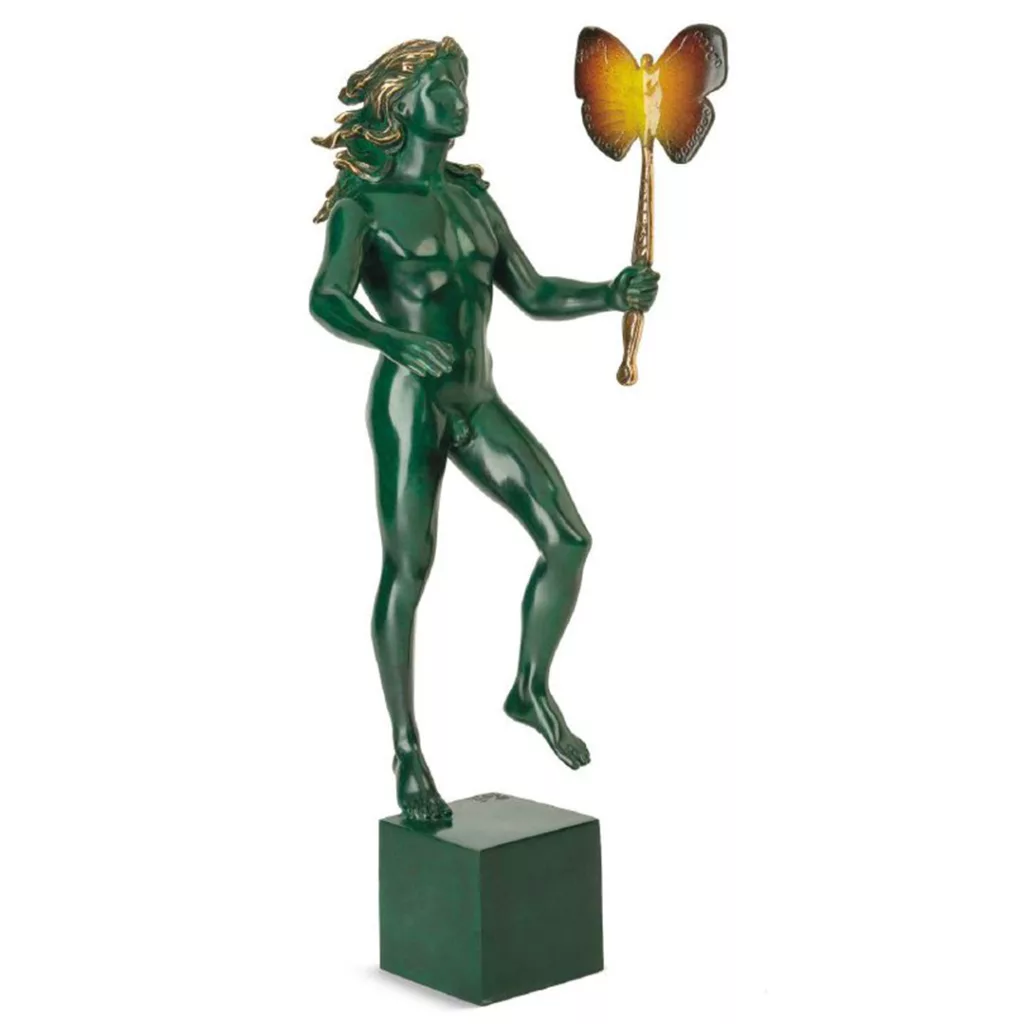
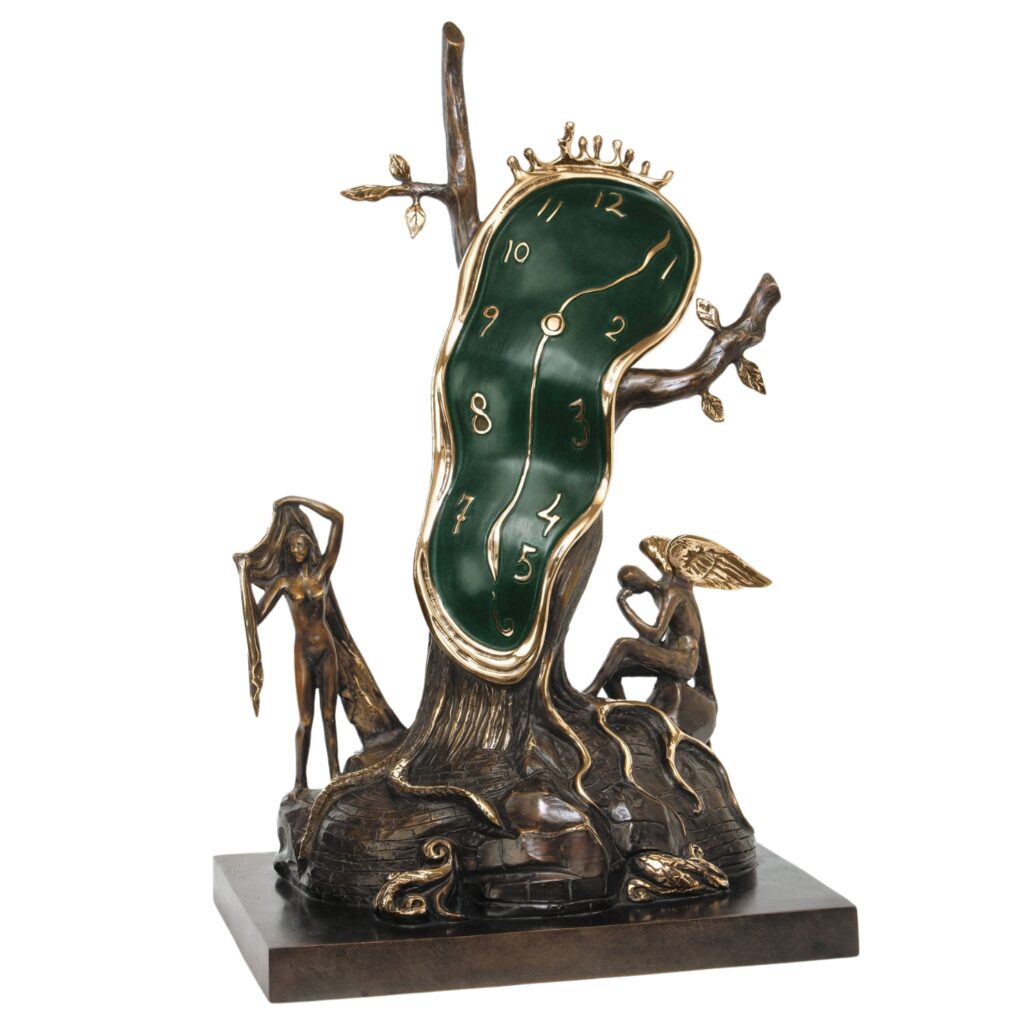
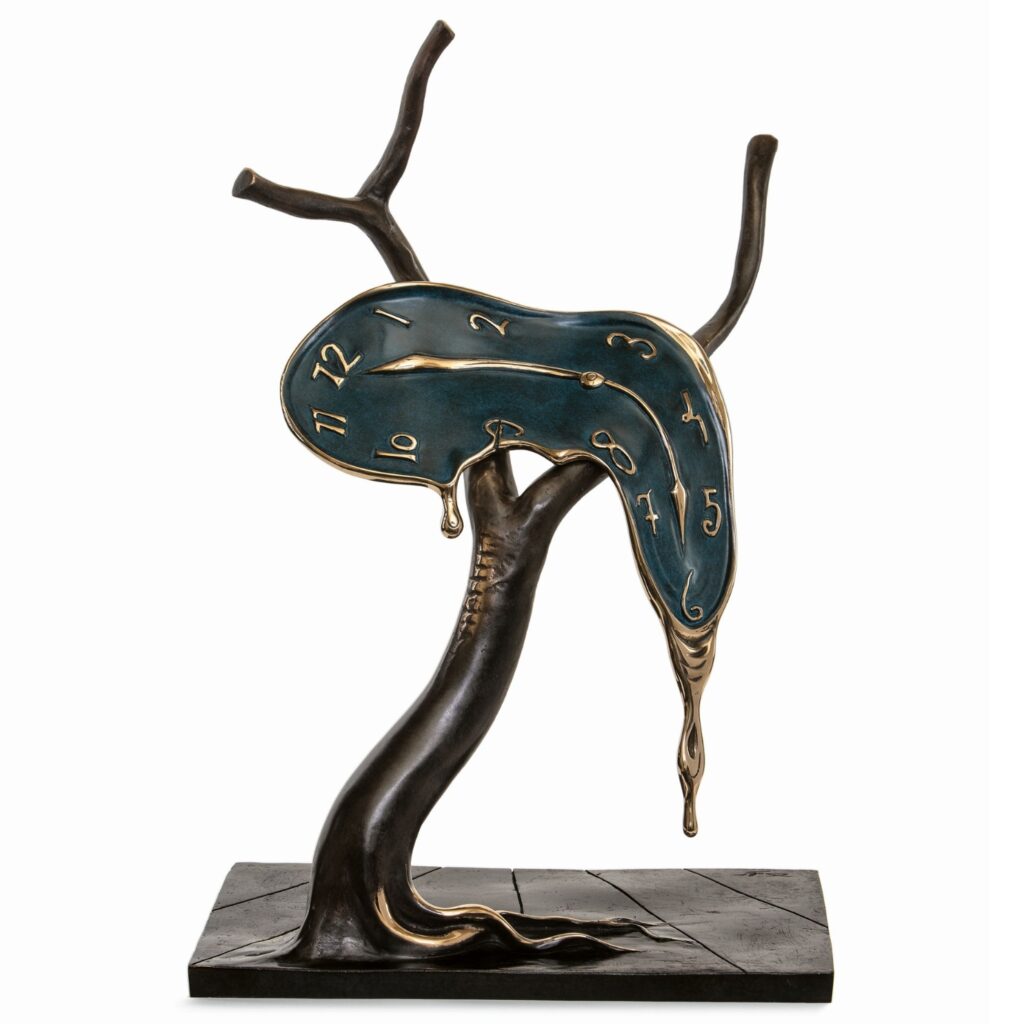
In the 1930s, Dalí began experimenting with three-dimensional art and sculpture. His desire was to translate the fetishes and obsessions of his unconscious into volume and solid matter. He thus recreated the major themes of his pictorial work in the form of sculptures. These sculptures were made using the lost wax technique, a process that allows for perfect precision in bronze modeling.
They represent a significant aspect of Dalí’s artistic creation and provide a synthesis of his interest in form. These bronze sculptures are effectively surrealism in the third dimension.
Galerie Montmartre since 2016, with a permanent representation in France and across international art fairs. The gallery handles international, door-to-door delivery with insurance.
Open Monday to Sunday, from 9:30am to 6:30pm