












The Galerie Montmartre
Open Monday to Sunday, from 9:30am to 6:30pm



Price on request
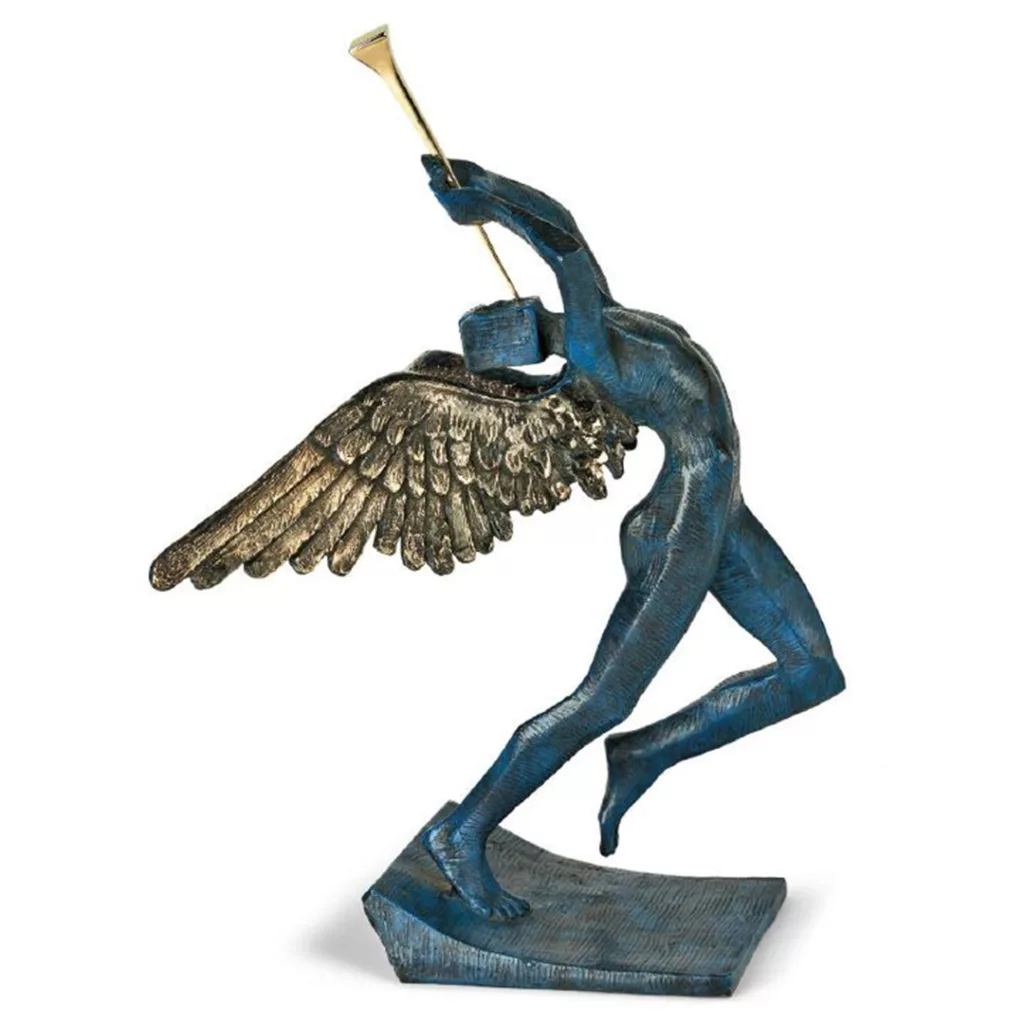
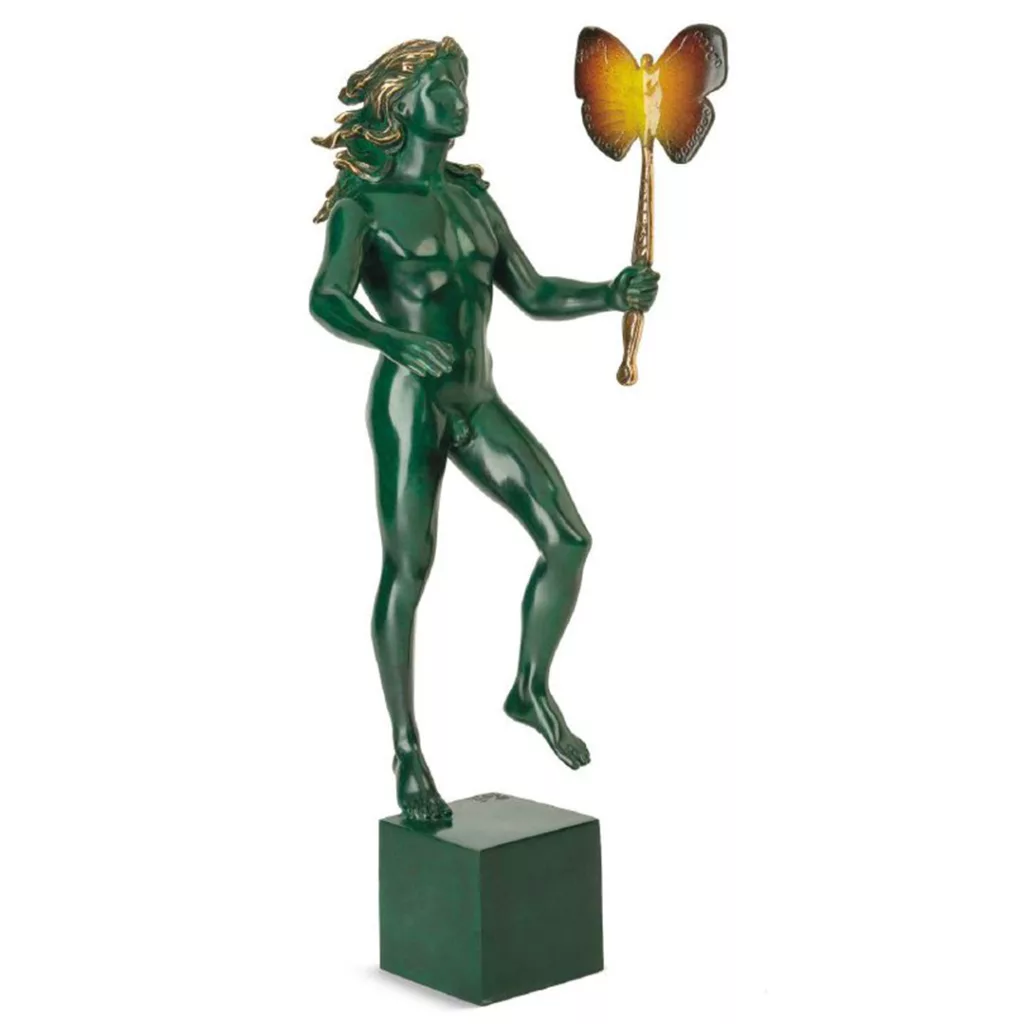
This image originates from Dalí’s famous Tarot series, which was created specifically for his wife and muse Gala, who nurtured Dalí’s interest in mysticism. The image, chosen to depict the “Devil” card, illustrates a figure falling towards the unknown, holding aloft a butterfly.
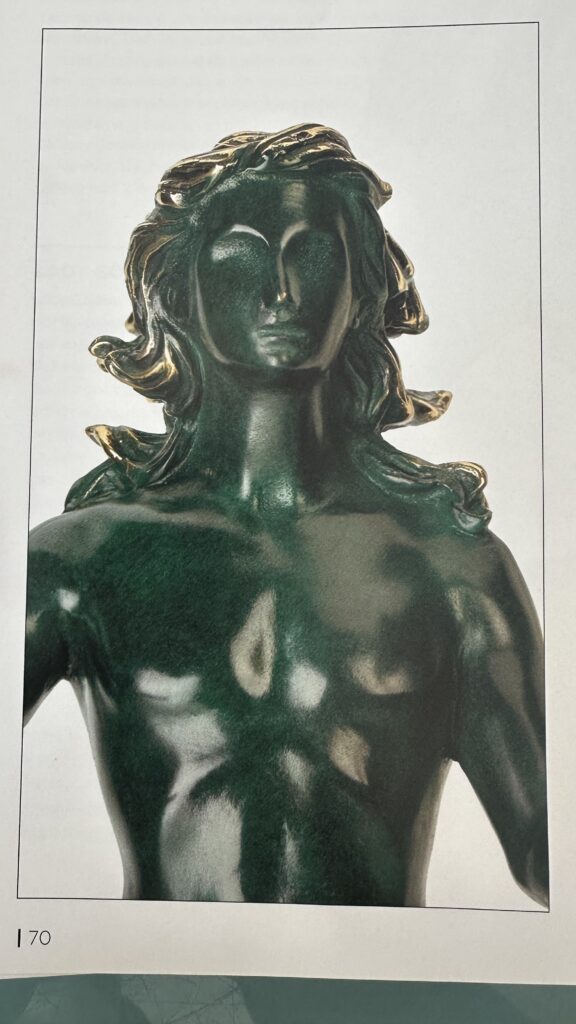
Dalí wished to see his two-dimensional artwork transformed into three dimensions; here the classical male figure is sculpted with immense detail, emblematic of the era of the Renaissance masters, whom Dalí was influenced by, specifically Leonardo da Vinci.
The sculpture suggests harmony, perfection, his flowing hair in the wake of his movement portrays an image of “beauty”. Dalí’s symbolism we see here is the butterfly. The butterfly represents metamorphosis and transformation, themes that particularly interested Dalí, together with immortality and incarnation. It is held aloft, seeming to represent the liberated spirit and progress to a higher awareness. In mythology, the butterfly represents the immortal soul; Dalí was on a quest for transcendence through his art.
The sculpture Man with Butterfly leaves the banality of the everyday grounded world in a celebration of life force, in which the man and the butterfly symbolize the duality of body and spirit.
| Technique | bronze, lost-wax |
| Materials | Bronze |
| Dimensions | 55.5 cm |
| Condition | excellent |
| Signature | engraved |
| Foundry | Perseo (CH) |
| Edition Information | numbered on 350 |
| Reference | R. N. Descharnes Salvador Dalí Sculptures Objects. Eccart. Ref. 648, page 252. |

Delivery throughout France and internationally
Insurance included for your artworks
FRANCE – BELGIUM – NETHERLANDS – LUXEMBOURG
Salvador Felipe Jacinto Dalí y Doménech was born in 1904 in Figueras, Spain. A painter, sculptor, and author, he is considered one of the most distinctive representatives of surrealism and icons of the 20th century.
Influenced by Impressionism, he began his artistic training at the academy in Madrid. On the advice of Miro, he then left for Paris, where he joined the Surrealist group. There he met his future wife, Gala, his “surrealist muse” and the inspiration for his life and work.
Dalí found his unique style around 1929 when he invented the paranoiac-critical method. His works revolve around the themes of dreams, sexuality, his wife Gala, and religion.
The sculptures of Salvador Dalí
In the 1930s, Dalí began experimenting with three-dimensional art and sculpture. His desire was to translate the fetishes and obsessions of his unconscious into volume and solid matter. He thus recreated the major themes of his pictorial work in the form of sculptures. These sculptures were made using the lost wax technique, a process that allows for perfect precision in bronze modeling.
They represent a significant aspect of Dalí’s artistic creation and provide a synthesis of his interest in form. These bronze sculptures are effectively surrealism in the third dimension.
Galerie Montmartre since 2016, with a permanent representation in France and across international art fairs. The gallery handles international, door-to-door delivery with insurance.
Open Monday to Sunday, from 9:30am to 6:30pm