







The Galerie Montmartre
Open Monday to Sunday, from 9:30am to 6:30pm

Born in Lille in 1959 and passionate about sculpture since childhood, Bénédicte Dubart left her job of ten years at a communications agency to devote herself entirely to working with clay and bronze. She began taking evening classes at the Ecole Supérieure des Arts Appliqués et du Textile in Roubaix, under the guidance of her future mentor, Armand Debève. She realized her lifelong dream, making her professional debut in 1992.
Once established, she began teaching her art a few years later, so that her work did not stop at material creation alone. Bénédicte Dubart then opened the doors of her successive workshops and revealed the obvious sincerity of her work to the public; as she so aptly puts it: “it is by working that we find originality, not by seeking it.”
Born in Lille in 1959 and passionate about sculpture since childhood, Bénédicte Dubart left her job of ten years at a communications agency to devote herself entirely to working with clay and bronze. She began taking evening classes at the Ecole Supérieure des Arts Appliqués et du Textile in Roubaix, under the guidance of her future mentor, Armand Debève. She realized her lifelong dream, making her professional debut in 1992.
Once established, she began teaching her art a few years later, so that her work did not stop at material creation alone. Bénédicte Dubart then opened the doors of her successive workshops and revealed the obvious sincerity of her work to the public; as she so aptly puts it: “it is by working that we find originality, not by seeking it.”
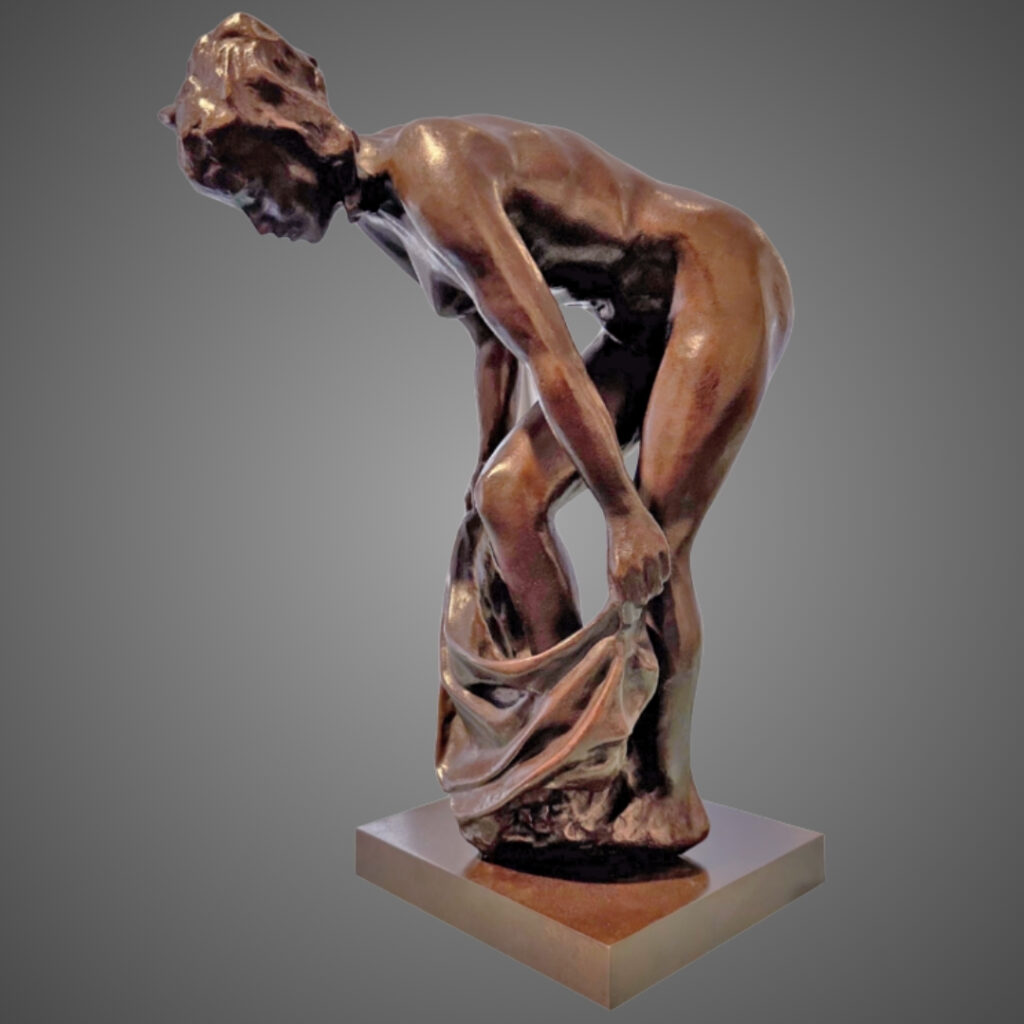
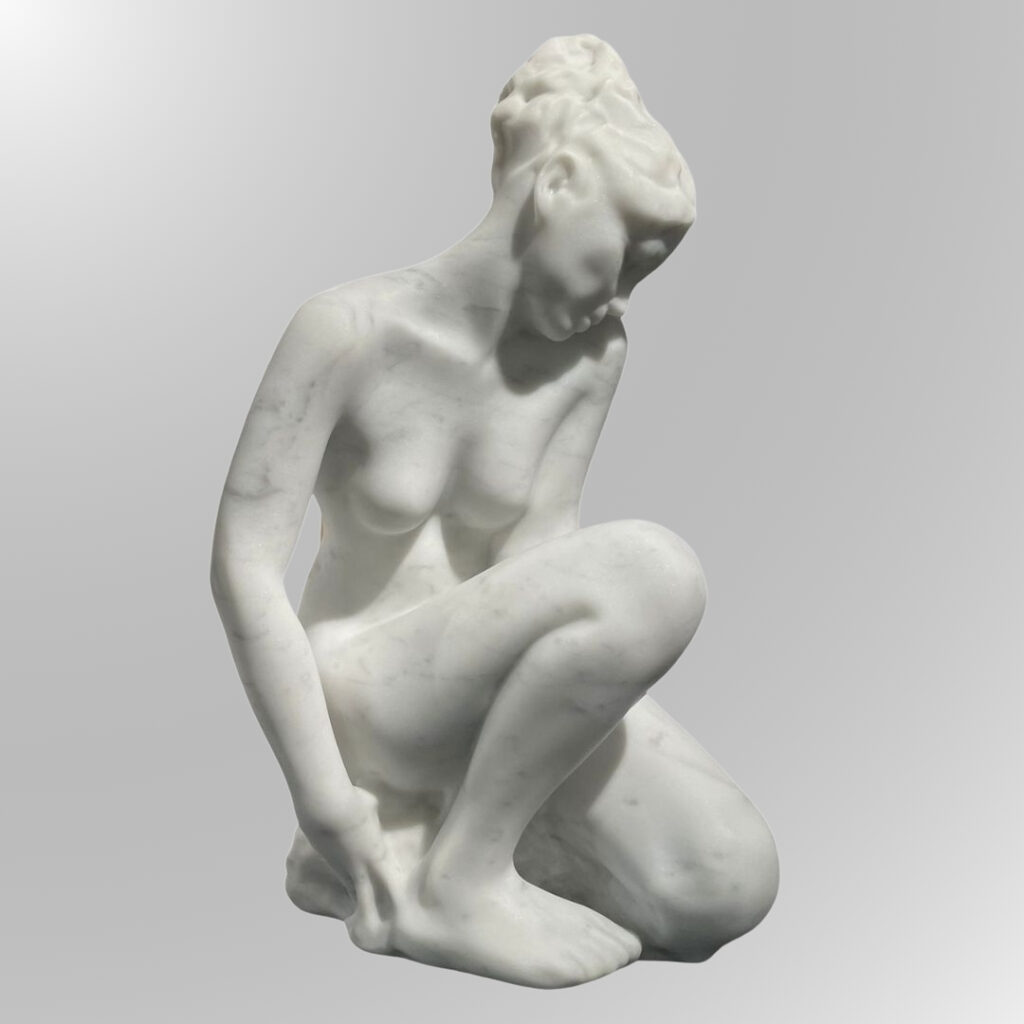
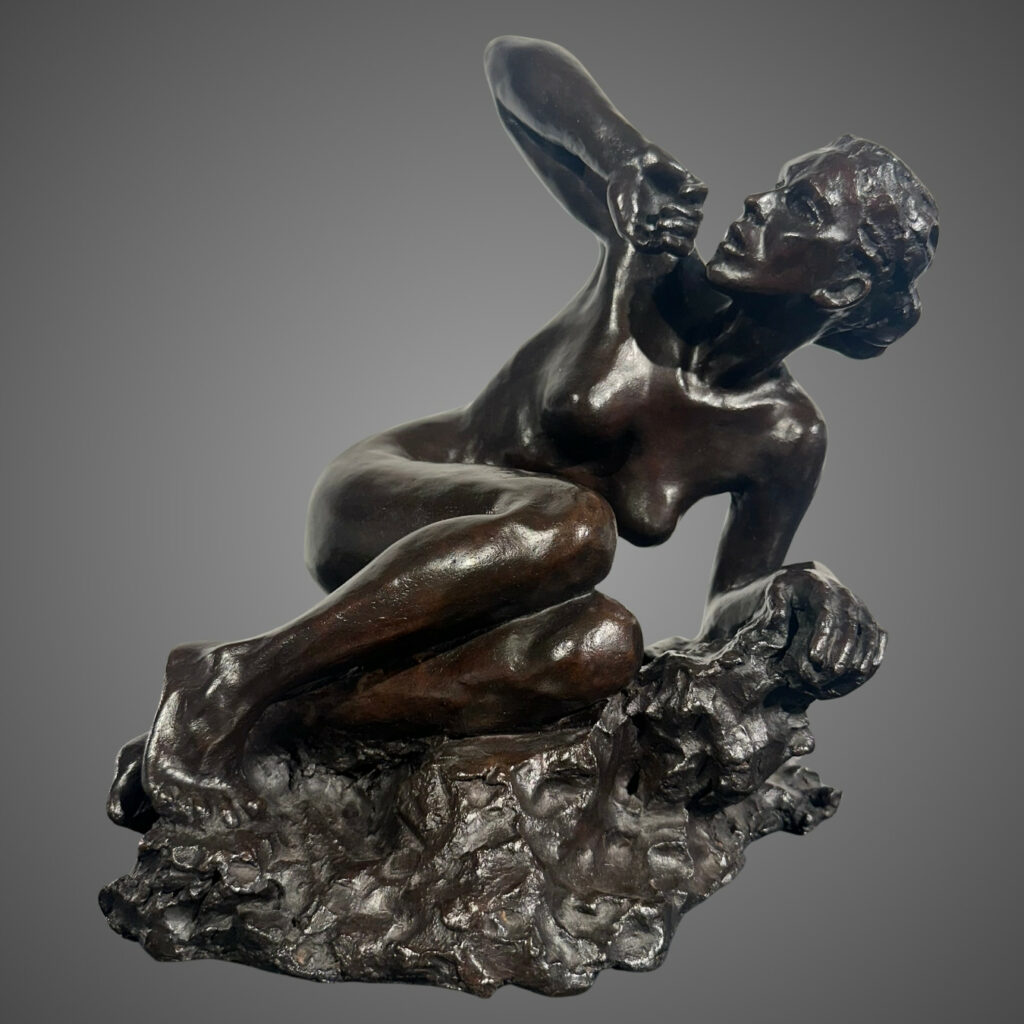
Bénédicte Dubart claims the legacy of the great masters in the best possible way: by passing it on. Some of her sculptures, through their treatment of surfaces and their sensuality, are directly reminiscent of Rodin or his studio, Camille Claudel, Lucien Schnegg, and Léon-Ernest Drivier. Rodin’s studies of Michelangelo’s sculpture, his innovative approach to movement, textural rendering, and the expressionism of his subjects have accompanied her since her training, as they did the master’s students.
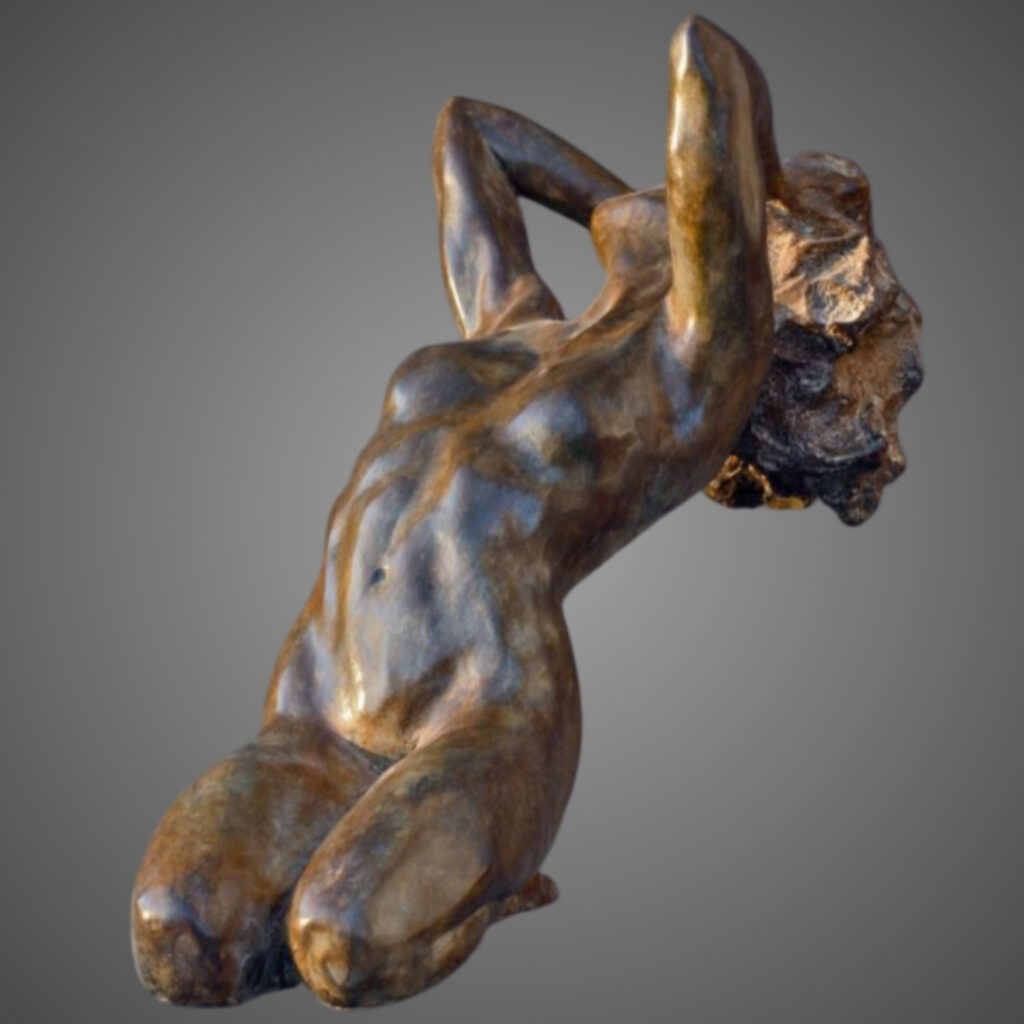
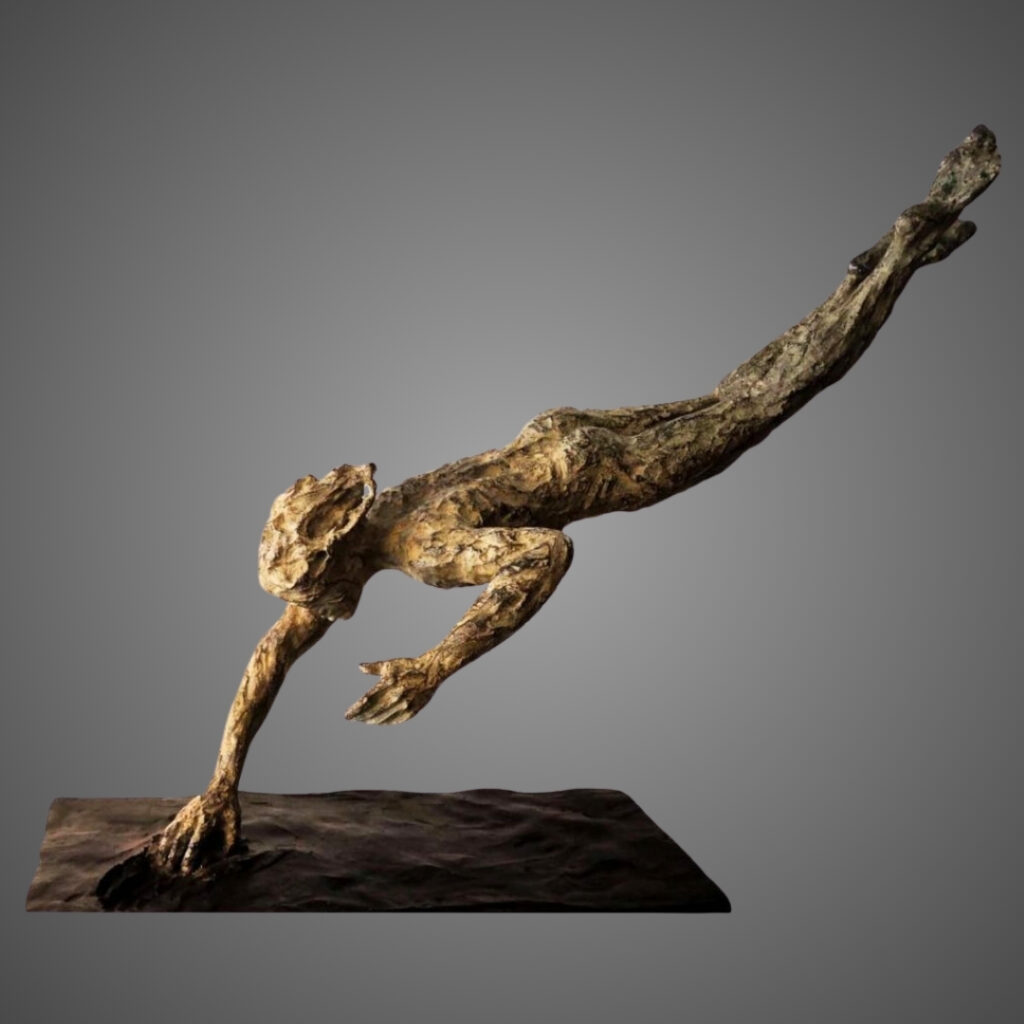
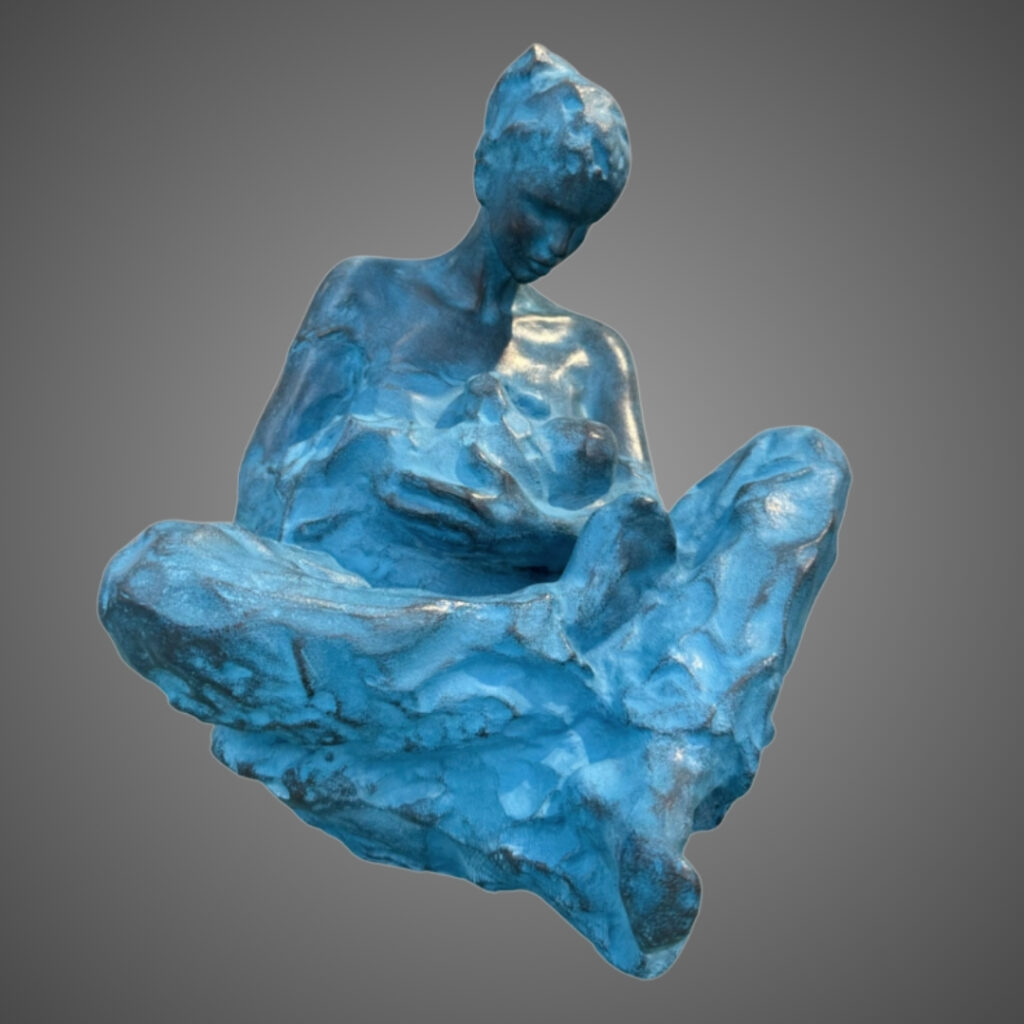
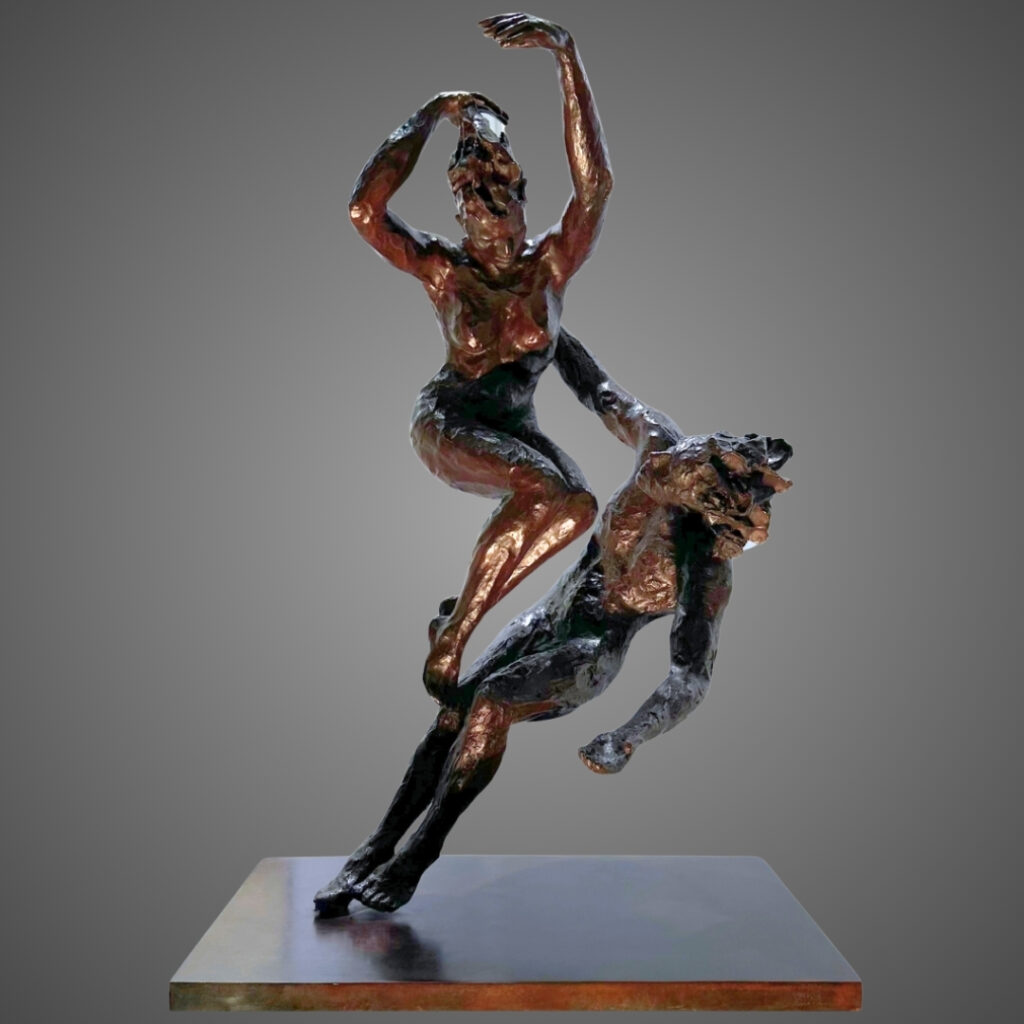
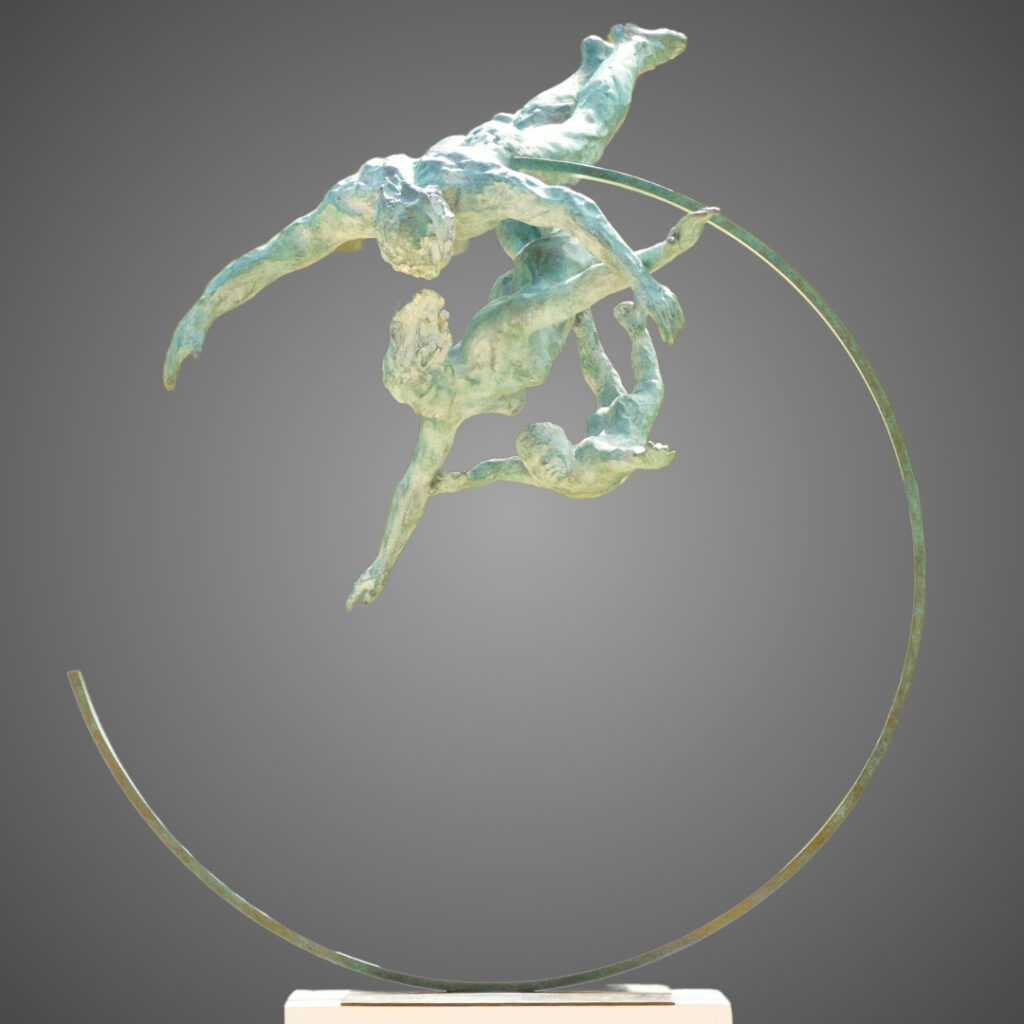
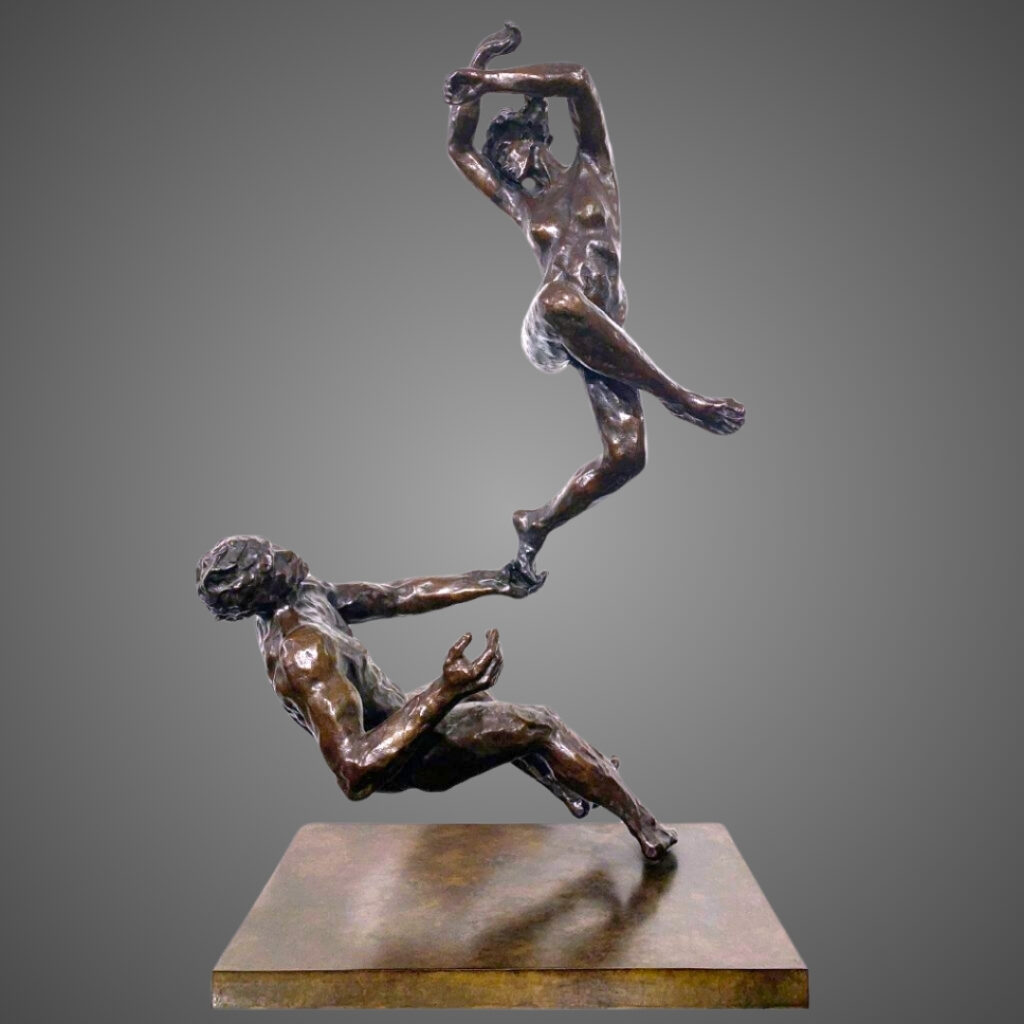
As an emancipated successor, Bénédicte Dubart also carries on the spirit of the “Schnegg gang” and a completely unique vision of movement. Movement and lightness go hand in hand, presenting her expression of grace, sometimes dramatic. The raw and rough appearance of some sculptures gives the metal another impetus, bringing the bronze closer to the original earth, as if it had been shaped in the same way, with bare hands.
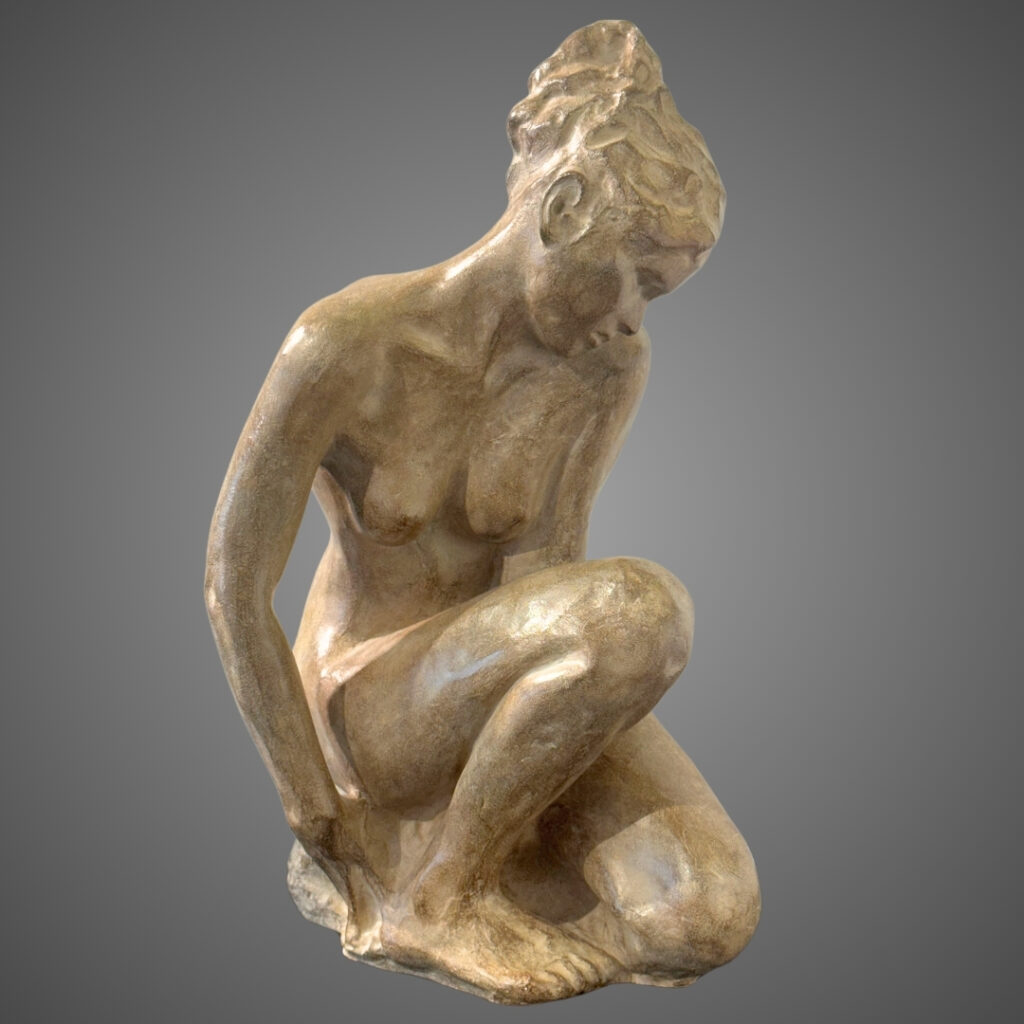
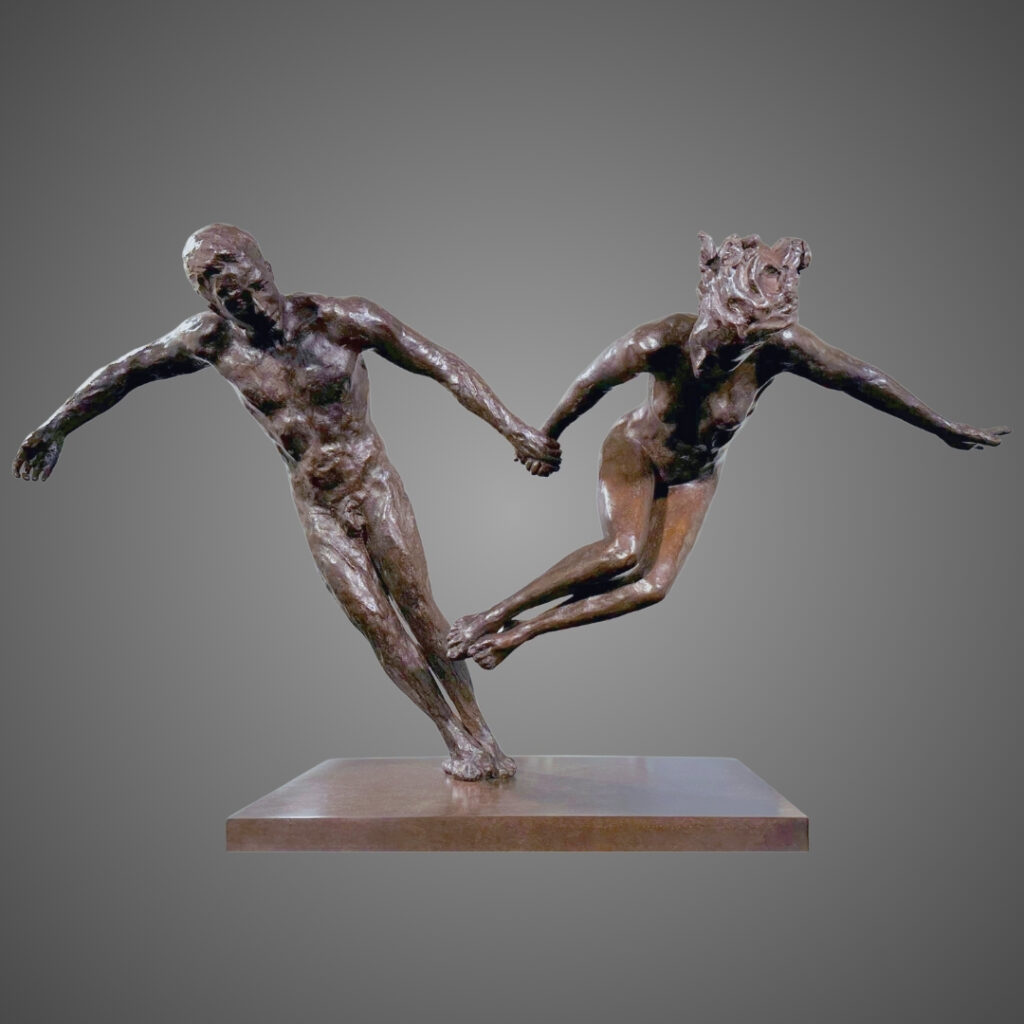
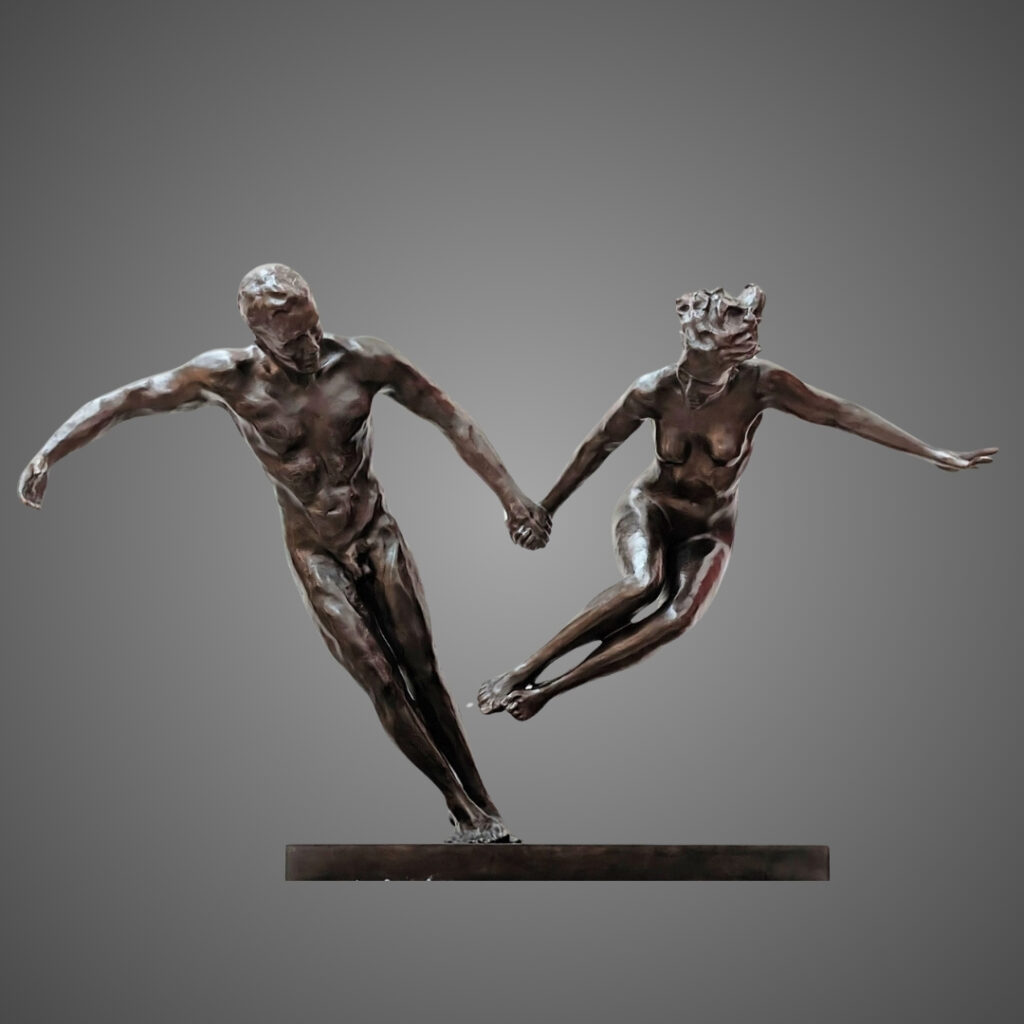
The modeling process takes the form of a fairly profound experimentation, where the importance she attaches to proportions is precisely enhanced by her work with live models. She achieves a remarkable balance in her sculptures, regardless of the postures, which are often extraordinary and sometimes dramatic. And with her passion for bodies rendered in clay, Bénédicte Dubart must be able to feel the sensations they express, particularly when posing.
She works with clay from the north, always the same clay, which she wants to keep as intact as possible by not drying it out. She has long modeled in a yurt, bathed in a special light, whose softness is easily discernible in her sculptures. The striking play of light and its reflections are essential to understanding her work, and she can certainly be considered even more of a “conveyor of emotions.”
Already firmly established in Lille and more broadly in France, her reputation is now international, extending to the Venice Biennale, where she received a special prize in 2019 for the exhibition “Woman’s Essence.” In 2017, she was even included in Anne Rivière’s Grand Dictionnaire des sculptrices en France (Great Dictionary of Women Sculptors in France).
Numerous commissions, both private and public, fueled her growing desire to think big. Her confident and delicate technique allowed her to enlarge her sculptures, such as the monumental “Au bord du monde” (At the Edge of the World) and “Yalla.” Some are completely original: “La Vierge à la Torah” in the courtyard of the Collège de Marcq-en-Baroeul, and “My Way” in Gaillard (Geneva), a stone’s throw from Switzerland. At the same time, his passion for Argentine tango inspired a series of highly original bronzes depicting couples and dancers, most of whom he knows personally. It is the character and powerful expressiveness of his sculpture that won us over.
Open Monday to Sunday, from 9:30am to 6:30pm