










The Galerie Montmartre
Open Monday to Sunday, from 9:30am to 6:30pm
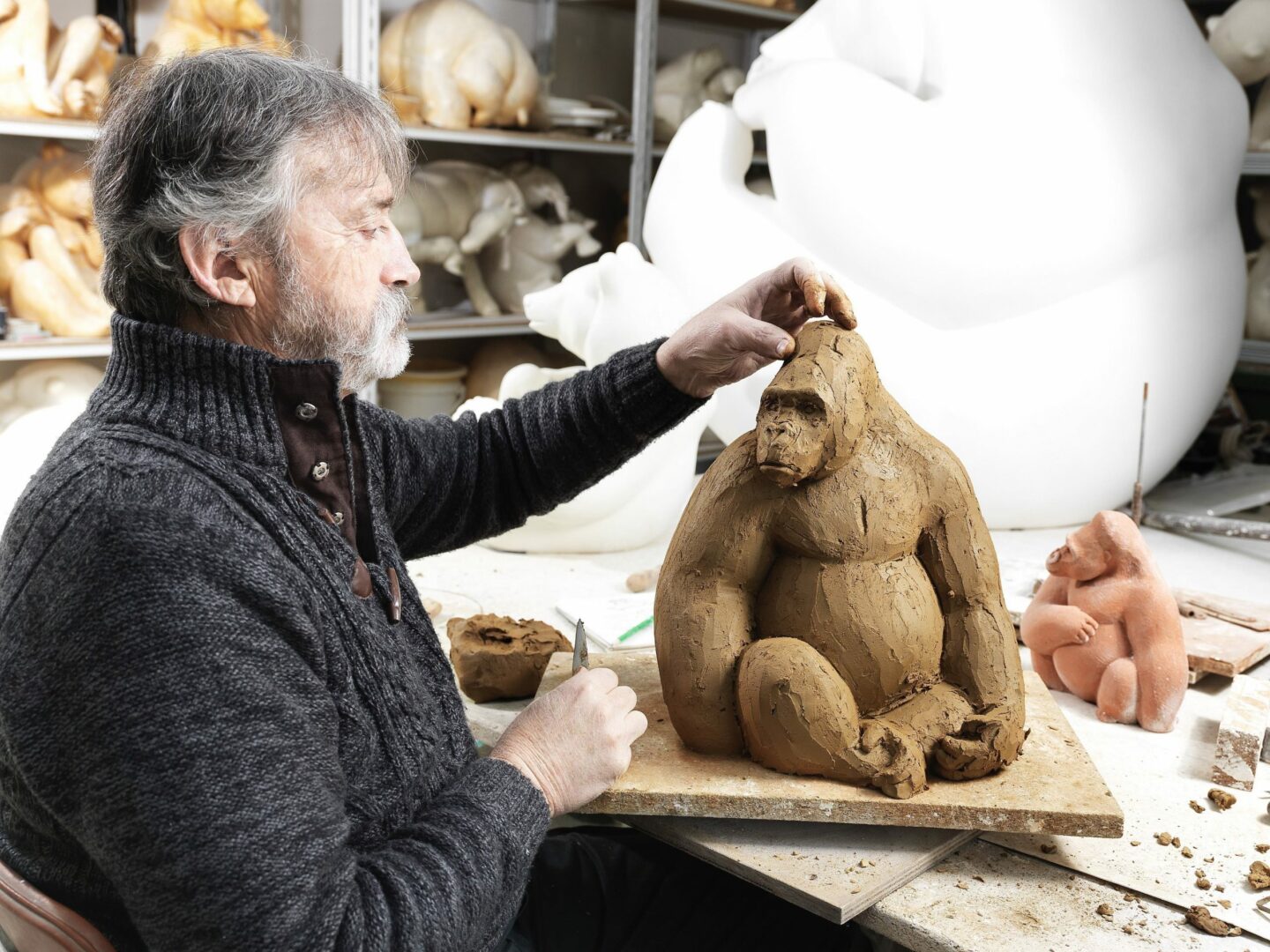
Michel Bassompierre was born on March 22, 1948, in Paris. He is one of the leading figures in the revival of animal sculpture, if not the most important, since its near disappearance after the war.
Michel Bassompierre trained in sculpture at the Beaux-Arts in Rouen under the guidance of René Leleu, maintaining his passion for animal sculpture. From this period, he still has his modeling knife, which he continues to use to work with clay.
Michel Bassompierre was born on March 22, 1948, in Paris. He is one of the leading figures in the revival of animal sculpture, if not the most important, since its near disappearance after the war.
Michel Bassompierre trained in sculpture at the Beaux-Arts in Rouen under René Leleu, maintaining his passion for animal sculpture. From this period, he still has his modeling knife, which he continues to use to work with clay.
The study
The “four characters”
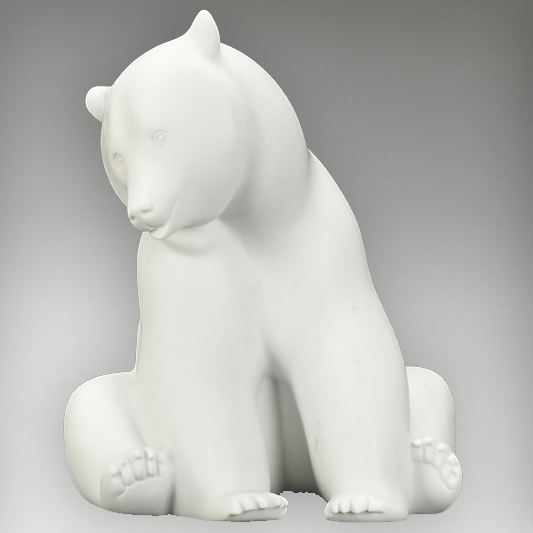
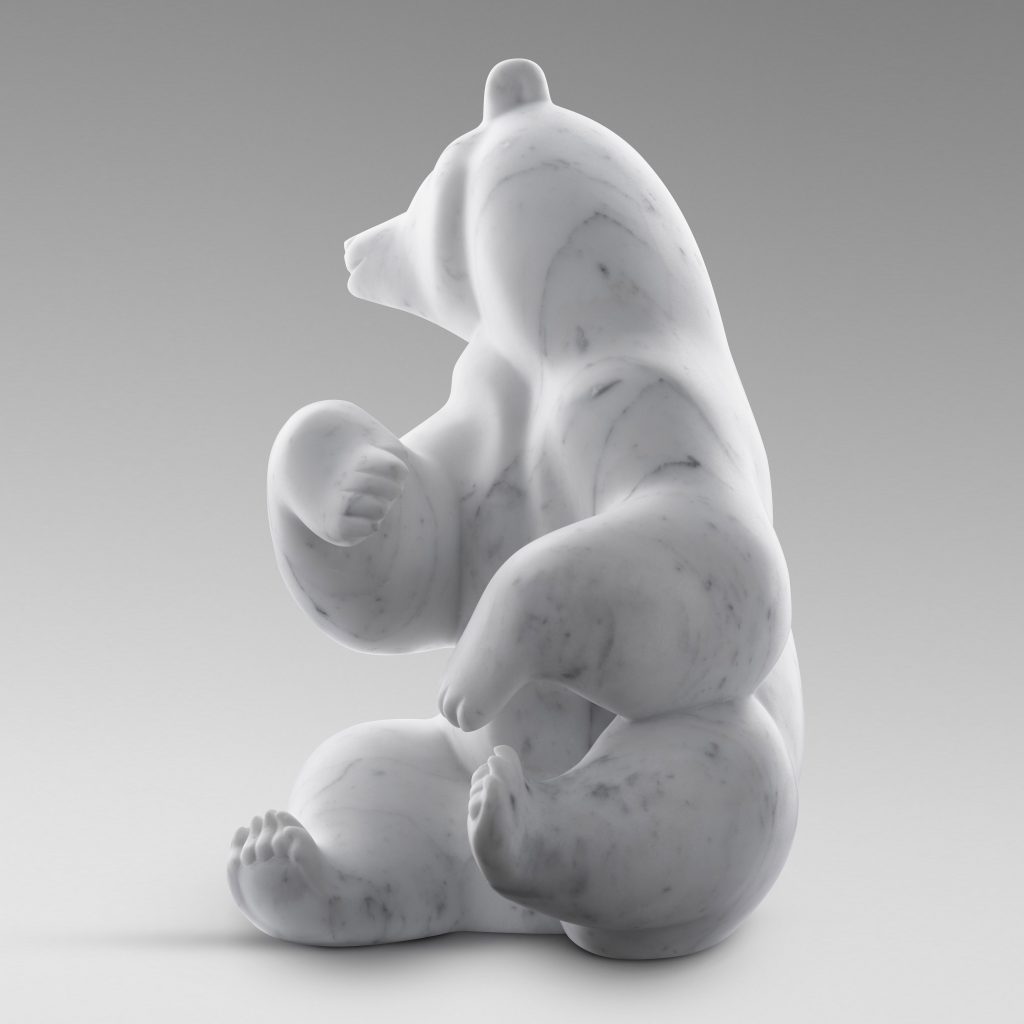
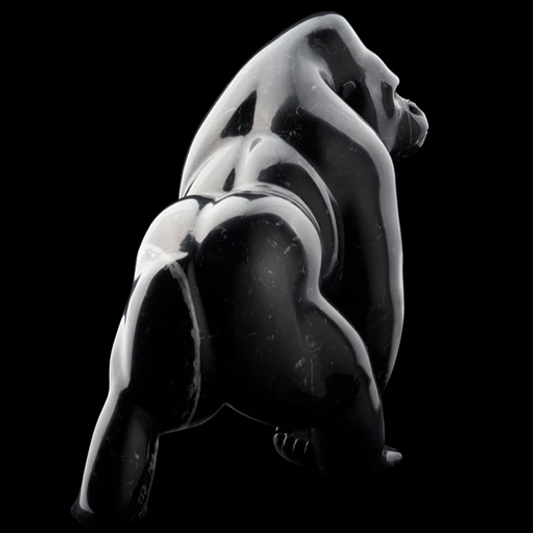
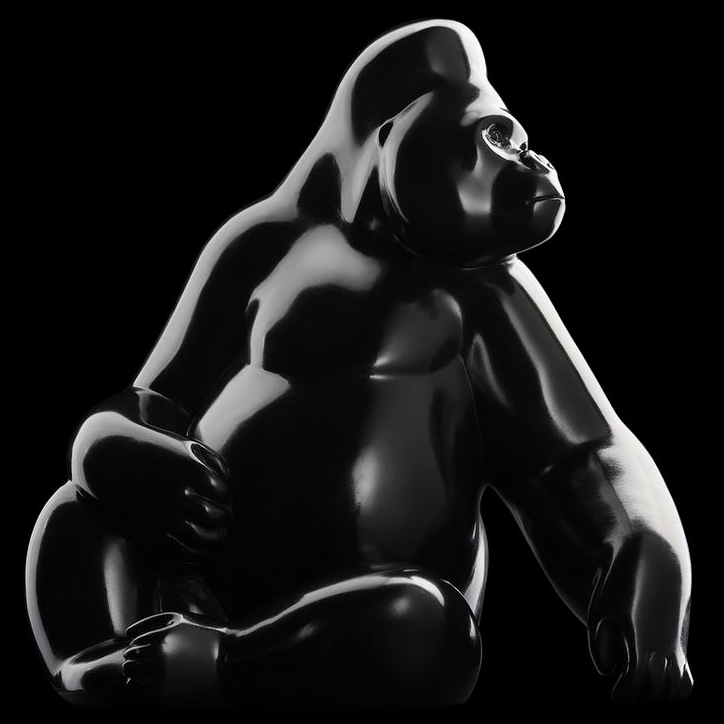
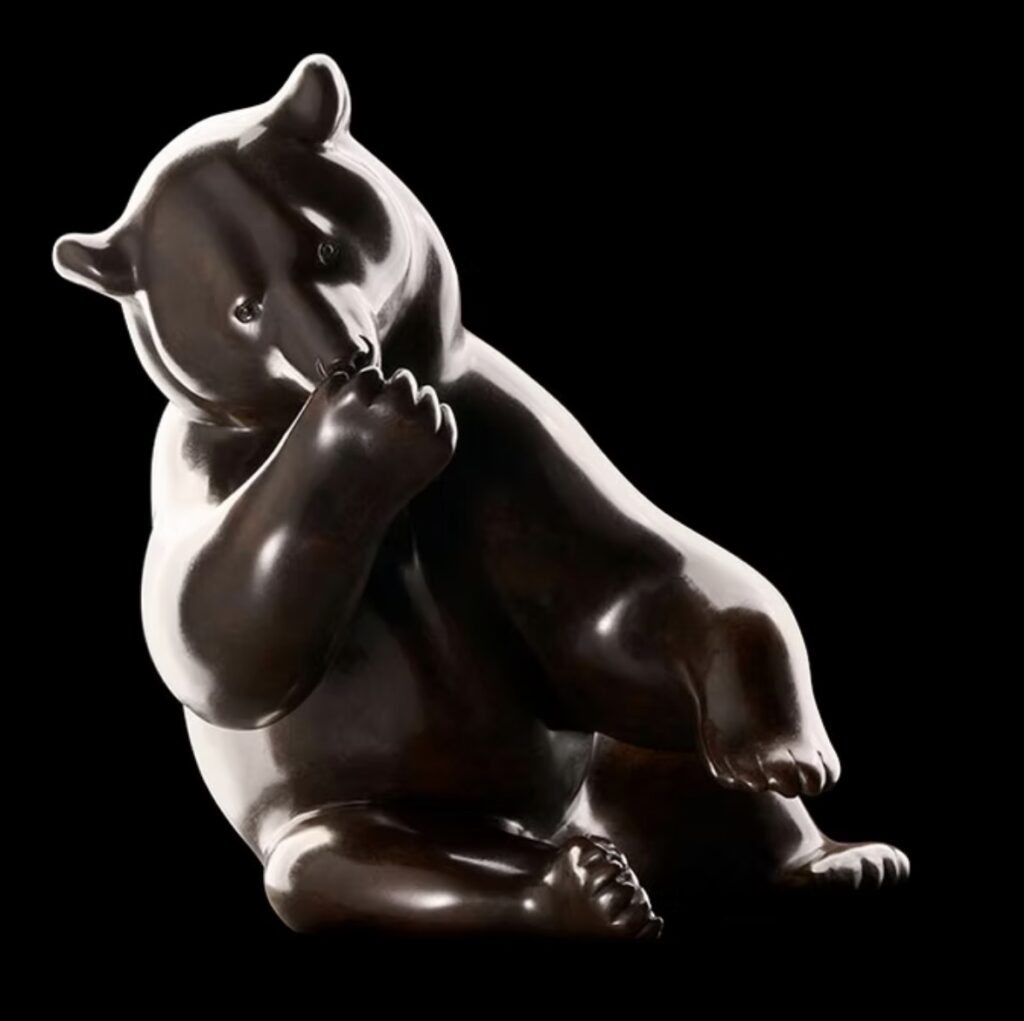
Michel Bassompierre says that he has “four characters” in his head—under his hair: the animalist, the anatomist, the draftsman, and the sculptor. They are indispensable to each other and perfectly complementary, facets of the passionate and meticulous observer of the animal world. His study of bears, gorillas, and a few other mammals reveals his fascination with an “extraordinary mechanism that is not our own.” After hours spent observing his subjects, he produces detailed sketches and studies of their attitudes.
Representing animal attitudes
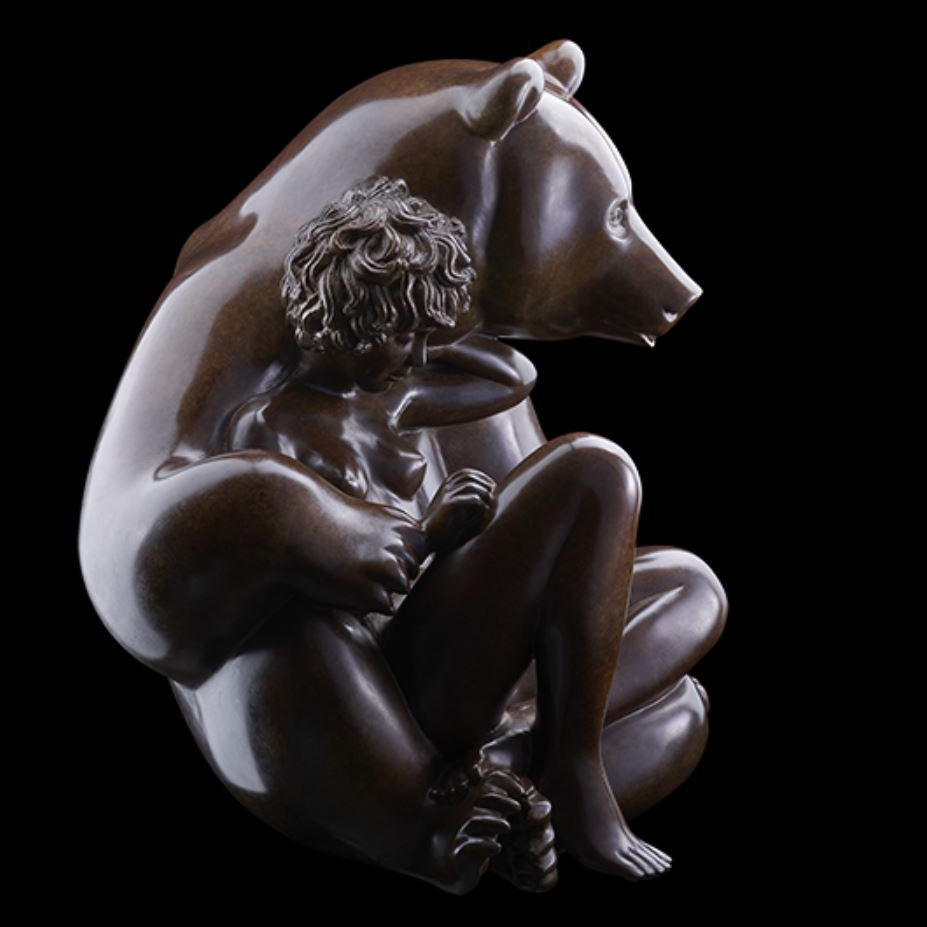
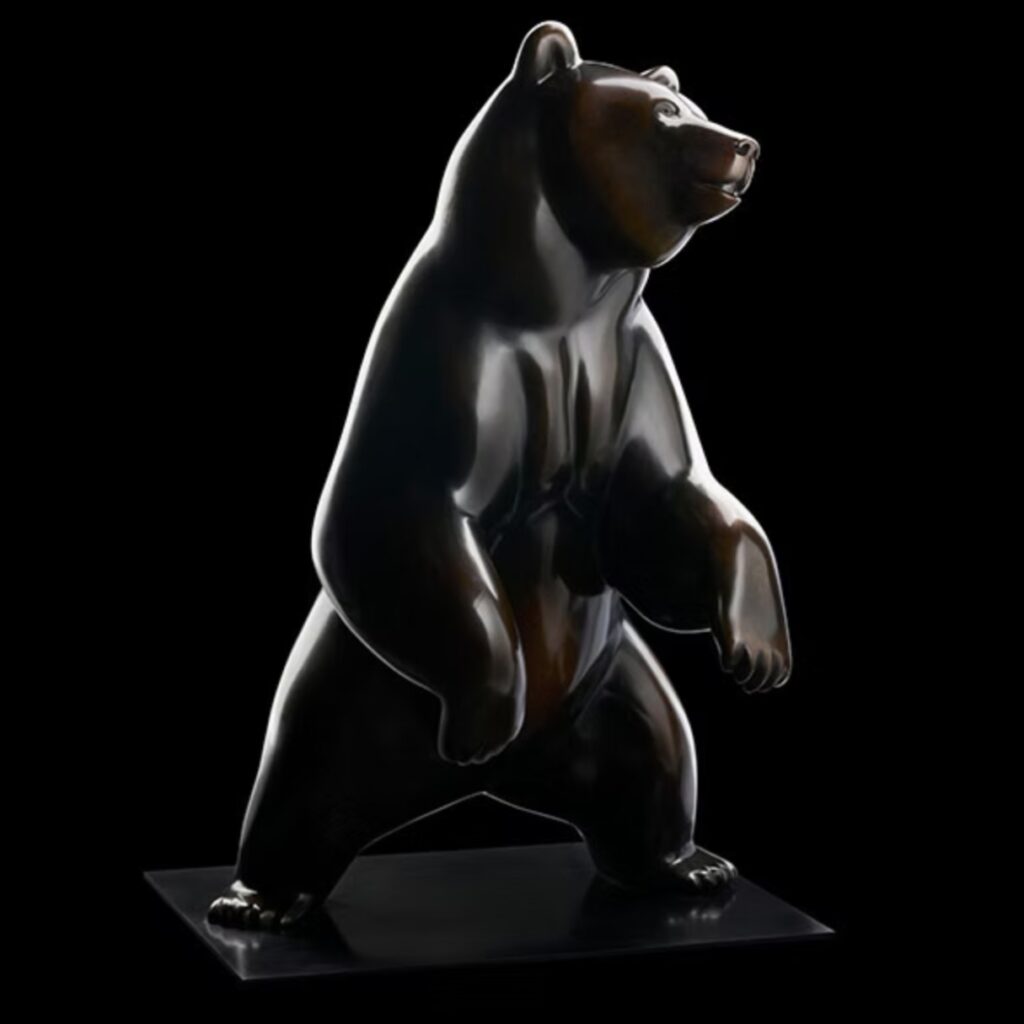
He subtly pursues the approach of “gentle observation” of animals, a concept formulated by Alain Richarme and initiated at the end of the 19th century. This approach is clearly different from the previous period, marked by the representation of fights between animals and the expression of anthropomorphic savagery, evoking turmoil and conflict. The attitudes he depicts are similar to those stylized by Emile Godchaux, which were innovative at the time. Animals are no longer viewed in a fantastical way, but are captured in the moment, adopting strangely human postures, magnified by impeccable technical mastery.
A master of animal posture
Roundness and technical continuity
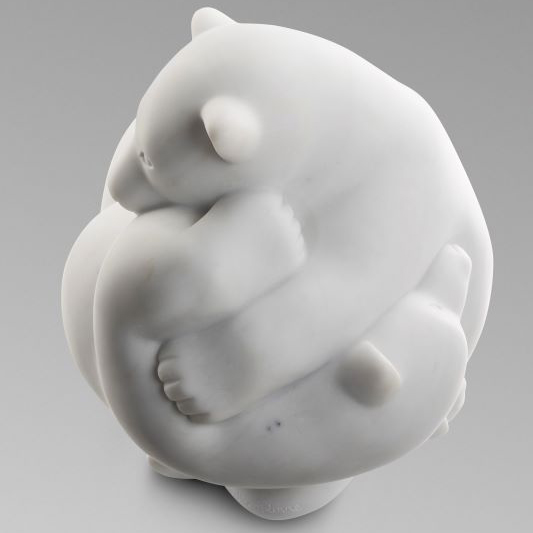
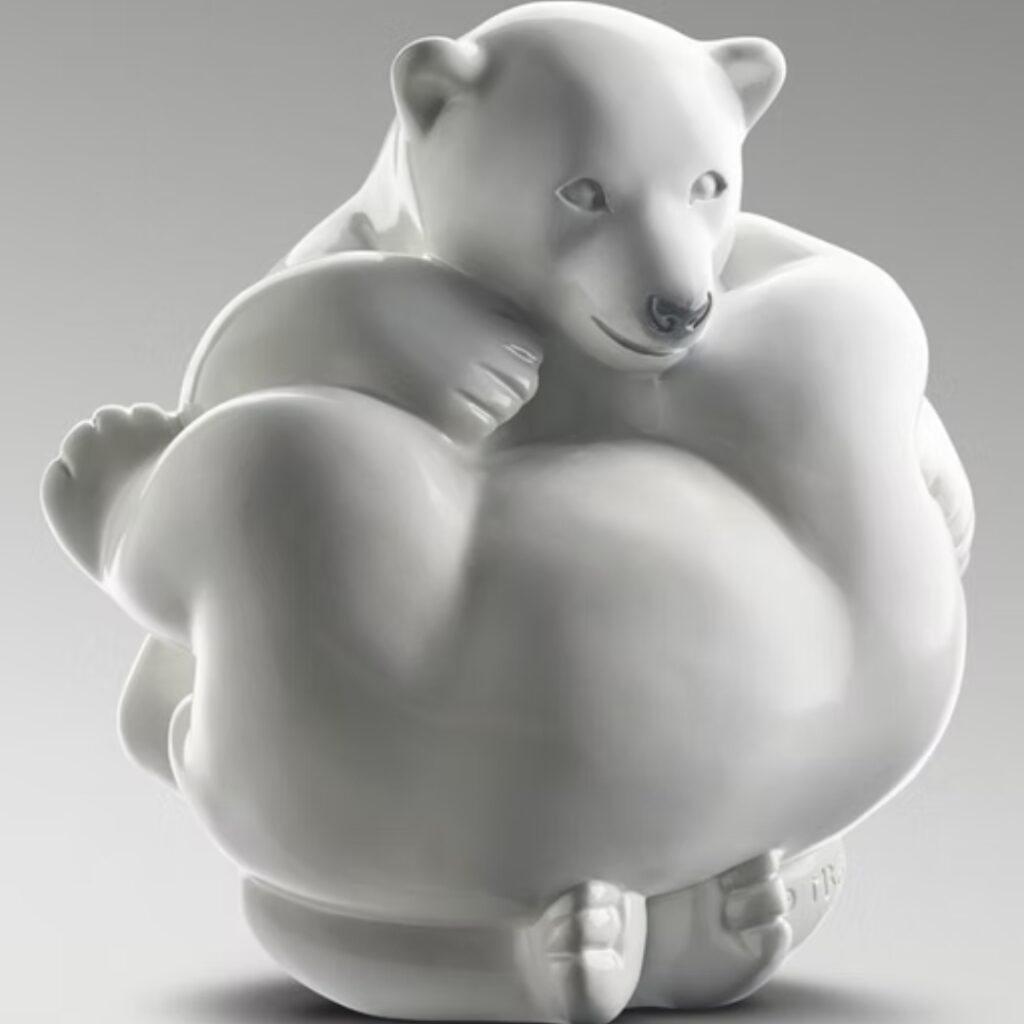
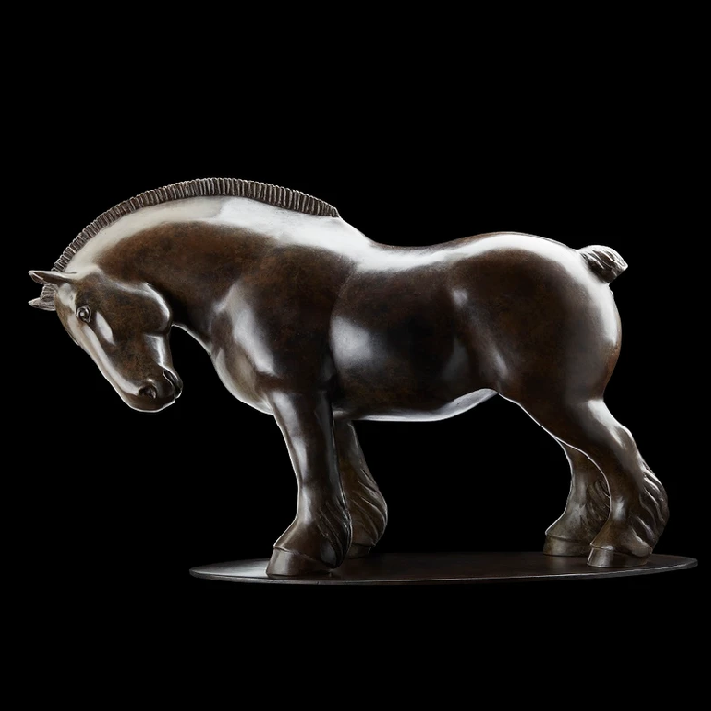
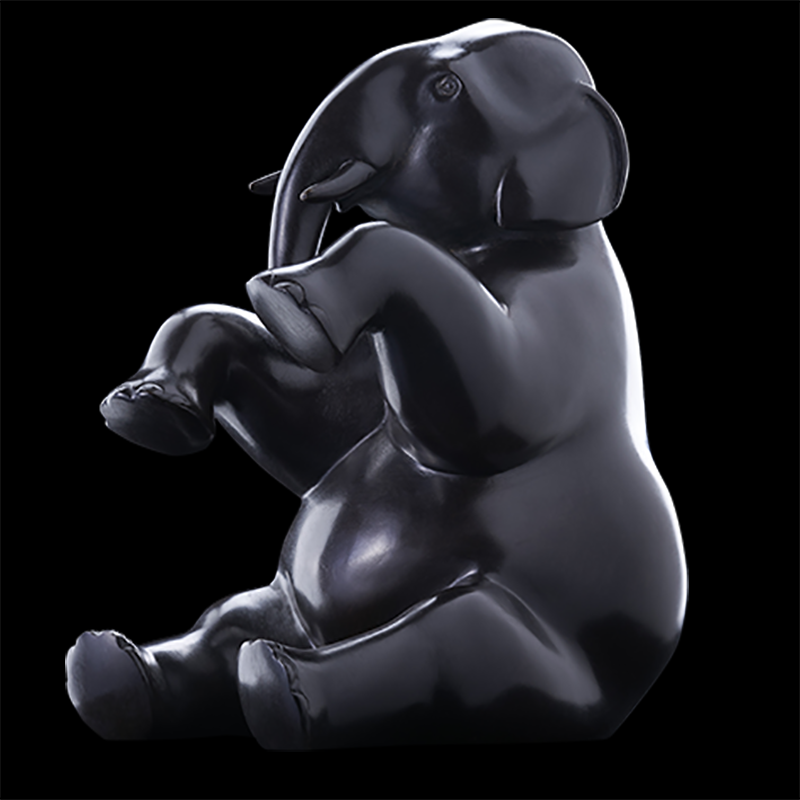
The quintessence of animal sculpture lies in the representation of the animal in a posture, a form that is partly formal. For Michel Bassompierre, the preferred form is the round shape—according to him, perfection lies not in the sphere, but in the egg, a kind of “tonic sphere,” almost in motion. Less ornamental than the characteristic curves of Art Nouveau, his creations are undoubtedly more animated. Indeed, the gentle roundness he captures is not purely figurative; it emanates from the animals themselves and their particular morphologies. Michel Bassompierre captures this essence and restores it transfigured.
He strives not so much to accentuate the animals’ curves as to sublimate them, adopting an aesthetic more in tune with Armand Petersen’s Antelope with a Round Back than certain variations of François Pompon’s White Bear, notably through the play of light reflected in the forms and patina. While one of the points of convergence with Pompon is indeed the form, the similarity is most evident in the depth of that form. Although different in the two artists, it remains equally perfect, allowing the work to be enlarged to several times its original size without altering the very essence of the sculptural spirit.
A unique animal spirit
An intimate relationship
Michel Bassompierre has truly established a singularity in the field of animal sculpture. Beyond his mastery of animal anatomy, his modeling conveys the artist’s love for these beings with such unique forms. A contemplation marked by respect and wonder, which gives his work a unique authenticity.
His animal creations are an extension of himself, shaped and sculpted with remarkable meticulousness, offered to the outside world. We can clearly perceive the artist’s tender observation, a perception that he conveys through the spirit, the forms, and the remarkably deep patinas, all elements that give a sculpture the status of a masterpiece.
Beyond sculpture, preserving life
Deeply committed to the preservation of endangered animal species, Michel Bassompierre now insists on linking his public exhibitions to lecture series featuring scientists and documentary filmmakers.
His commitment also drives him to work directly with foundations such as Yann Arthus-Bertrand’s Good Planet Foundation and the WWF. In May 2024, he will participate in a charity sale at the Hôtel Drouot for the 50th anniversary of the WWF, under whose auspices he will exhibit in 2024 at the Château-musée Rosa Bonheur. His particularly moving art and his commitment probably make Michel Bassompierre one of the most worthy representatives of the animal cause.
Open Monday to Sunday, from 9:30am to 6:30pm